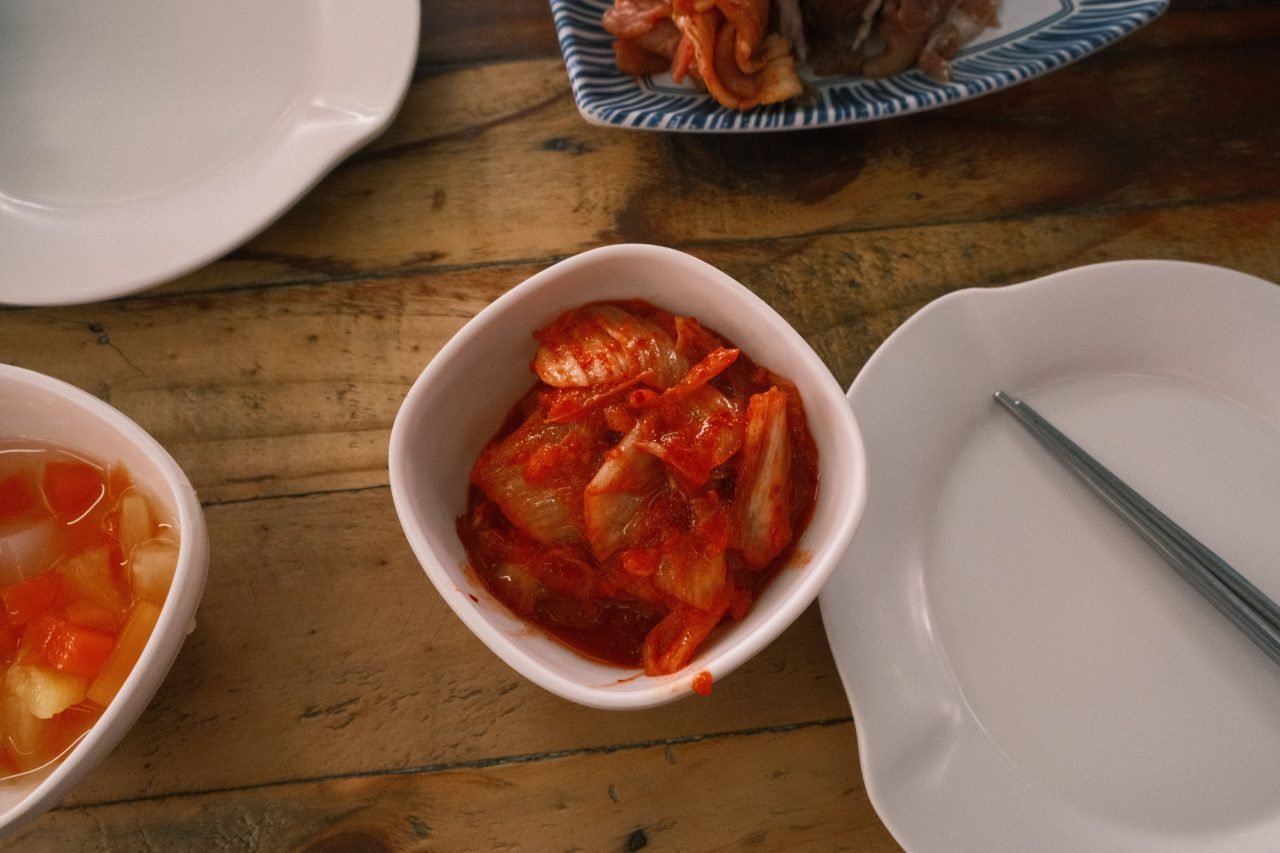
A 12-week clinical trial found that daily kimchi significantly reduced body fat in overweight adults. Look up kimchi and stomach cancer, though, and the story flips — except the actual data says the risk was never really about kimchi. It was about how much people were eating.
Both of those findings are real, and both come from actual research. The confusing part is figuring out where the line is — when kimchi is doing your gut a favor, and when the sodium starts working against you. That’s what this comes down to: not whether kimchi is “good” or “bad,” but how much of it makes sense for you.
This post contains affiliate links. If you make a purchase through them, we may earn a small commission — at no extra cost to you.
What’s Actually in a Serving of Kimchi
This article is for informational purposes only and is not medical advice. If you have kidney disease, high blood pressure, or take medication that affects potassium or sodium levels, talk to a doctor before making significant changes to your diet.
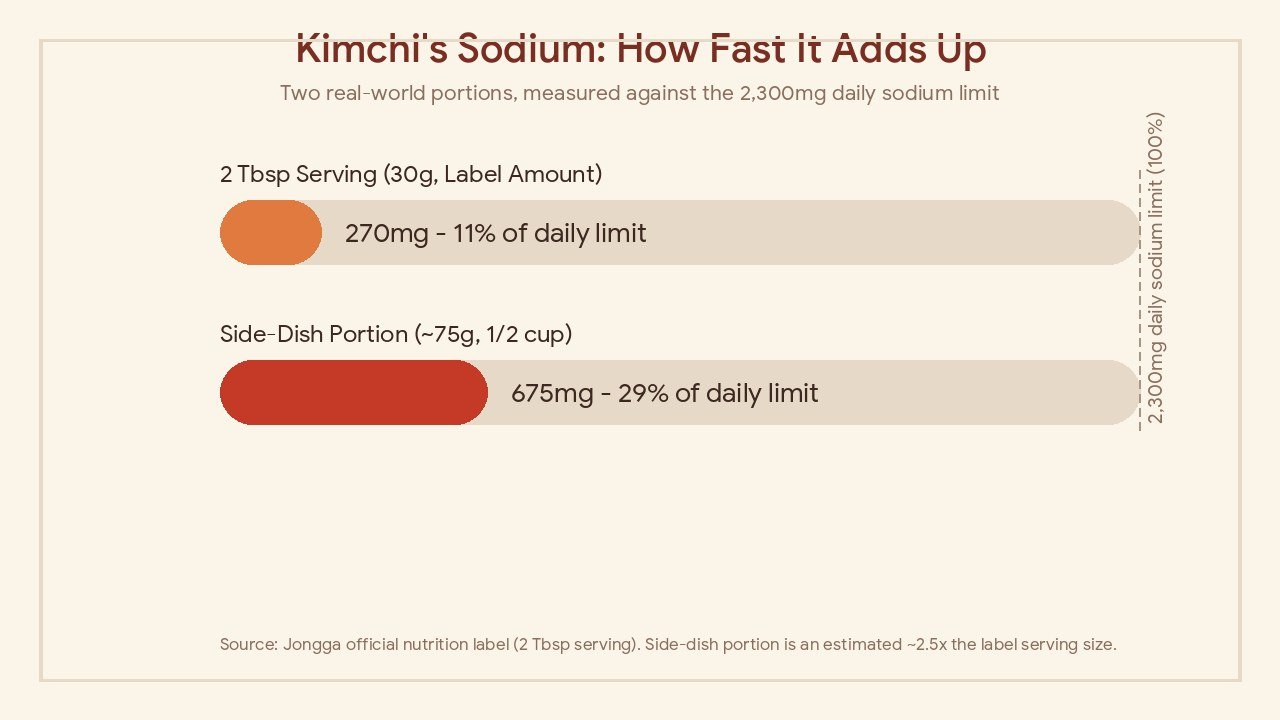
A 2-tablespoon (30g) serving of traditional cut cabbage kimchi contains about 270mg of sodium — 11% of the recommended daily value — alongside just 10 calories, 2g of carbohydrates, and less than a gram each of fiber and protein. That sodium level isn’t an accident or a sign of a “bad” recipe: napa cabbage is traditionally salted before fermentation to draw out moisture and control which bacteria grow, and the finished product typically includes salted fish sauce or shrimp sauce for extra flavor and fermentation. Salt is fundamentally part of how kimchi becomes kimchi.
The catch is that 2 tablespoons is a small amount. A typical side-dish portion at a meal — closer to half a cup — delivers meaningfully more sodium than the label serving size suggests, which matters once you’re eating kimchi regularly rather than as an occasional garnish.
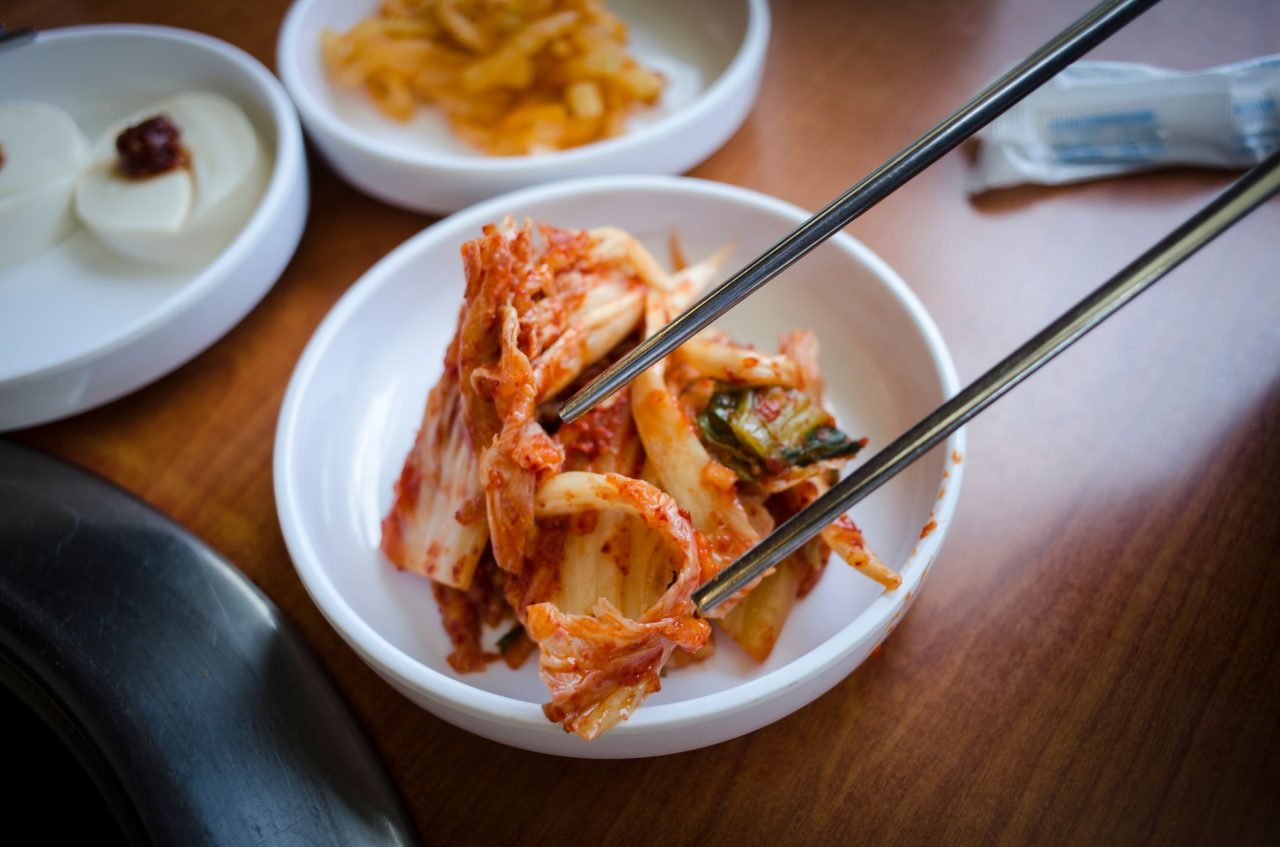
▶ Watch Related Video (YouTube)
The Case for Kimchi: What a 12-Week Clinical Trial Found
Here’s where kimchi’s reputation as a gut-health food actually holds up. A 2024 randomized, double-blind, placebo-controlled clinical trial published in the Journal of Functional Foods gave 90 participants with a BMI between 23 and 30 either fermented kimchi powder or a placebo daily for 12 weeks. The kimchi group showed a statistically significant reduction in body fat mass compared to the placebo group, with both a spontaneously fermented version (p=0.004) and a starter-fermented version (p=0.003) producing the effect.
The same trial found that kimchi consumption increased the proportion of Akkermansia muciniphila, a bacterium known for its probiotic properties, while reducing Proteobacteria. That’s a specific, measurable shift in gut bacteria — not just a general “fermented food is probably good for you” claim.
The Sodium Question: Does Kimchi Really Raise Stomach Cancer Risk?
This is the part that makes people nervous, and it deserves a straight answer. A 2021 case-control study in Nutrients, which matched 307 pairs of stomach cancer patients and healthy controls in Korea, set out to test whether high-sodium dish groups — including pickled vegetables like kimchi — were linked to stomach cancer risk. The researchers noted upfront that prior studies on pickled vegetables and stomach cancer had produced inconsistent results.
What they actually found is more reassuring than the headlines about “kimchi and cancer” suggest: in this study, people who ate a moderate amount of pickled vegetables had a lower rate of stomach cancer than people who ate very little, and the researchers concluded that a moderate amount of kimchi, rather than excessive intake, may actually help with stomach cancer-related health concerns. The same paper acknowledged that other meta-analyses have linked pickled vegetables to increased stomach cancer risk, largely because of their sodium content — so the evidence isn’t unanimous. But the pattern across the research is less “kimchi causes cancer” and more “how much salty, pickled food you eat in total matters.”
So How Much Kimchi Is Actually Fine to Eat Every Day?
Put the two threads together and a practical answer starts to form: a moderate, side-dish-sized amount of kimchi appears to come with real benefits and doesn’t show up as a red flag in the research. The concern shows up at the extremes — eating large amounts of salty, pickled foods as a dietary habit, not having a spoonful with dinner.
If sodium is something you’re actively watching, there’s a food-based way to work with it rather than against it. WHO’s 2012 potassium intake guideline, based on a meta-analysis of 22 randomized controlled trials, found that increasing potassium intake lowered blood pressure more in people with higher sodium intake — with the biggest effect (a 6.91 mmHg drop in systolic blood pressure) seen in groups consuming more than 4g of sodium per day. Pairing a kimchi-heavy meal with potassium-rich vegetables and fruit is a reasonable, food-first way to offset that sodium load — the same guideline found dietary potassium and potassium supplements had similar effects on blood pressure, but NIH’s Office of Dietary Supplements notes that a person’s potassium needs should be met primarily through diet, since people with chronic kidney disease or those taking certain medications, such as ACE inhibitors or potassium-sparing diuretics, can develop dangerously high potassium levels even at intakes that would be perfectly normal for someone else.
If you’re looking to add a well-made version to your rotation, Jongga Mat Kimchi is a traditionally fermented cut cabbage kimchi imported from Korea, and it’s a reasonable way to get the fermentation benefits without guessing at the sodium content — the nutrition label makes it straightforward to keep track of.
The Bottom Line
Kimchi’s reputation as a gut-health food isn’t just internet wellness talk — a real 12-week clinical trial backs up meaningful body fat and gut bacteria changes. The sodium concern is real too, but the actual cancer research points toward moderate intake being fine, or even protective, with the risk concentrated at the excessive end rather than in a normal side-dish portion.
So the honest takeaway isn’t “eat more kimchi” or “avoid kimchi” — it’s that a consistent, moderate amount, like what you’d get from Jongga Mat Kimchi alongside a meal, is where the research actually lands. That 12-week trial and that cancer study weren’t measuring two different foods; they were measuring two different amounts of the same one.
Sources
- Lee W, et al. “Effects of kimchi consumption on body fat and intestinal microbiota in overweight participants: A randomized, double-blind, placebo-controlled, single-center clinical trial.” J Funct Foods. 2024;121:106401.
- Kwak JH, et al. “Gastric Cancer and the Daily Intake of the Major Dish Groups Contributing to Sodium Intake: A Case-Control Study in Korea.” Nutrients. 2021;13(4):1365.
- WHO. “Guideline: Potassium Intake for Adults and Children” — Summary of evidence. Geneva: World Health Organization; 2012.
- Jongga(Chongga) 공식 영양정보 페이지 — Mat Kimchi
- NIH Office of Dietary Supplements. “Potassium – Health Professional Fact Sheet.”