
A hydrocolloid pimple patch can visibly shrink an oozing, already-popped pimple almost overnight. Put the same patch on a closed pimple right next to it, and the difference is far less dramatic — and that gap has nothing to do with which brand you’re using.
If you’ve ever wondered why a patch worked wonders on one spot but did almost nothing for the pimple next to it, the answer isn’t in your skin or your patch brand. It’s in what stage that pimple was actually at when you stuck the patch on. By the end of this, you’ll know exactly what these patches are doing on a physical level, why timing changes the outcome so much, and how to actually use one for the best shot at results.
This post contains affiliate links. If you make a purchase through them, we may earn a small commission — at no extra cost to you.
What’s Actually in a Pimple Patch (Hydrocolloid, Tea Tree Oil, Salicylic Acid)
This article is for informational purposes only and is not medical advice. If you have persistent or severe acne, talk to a dermatologist about a treatment plan suited to your skin.
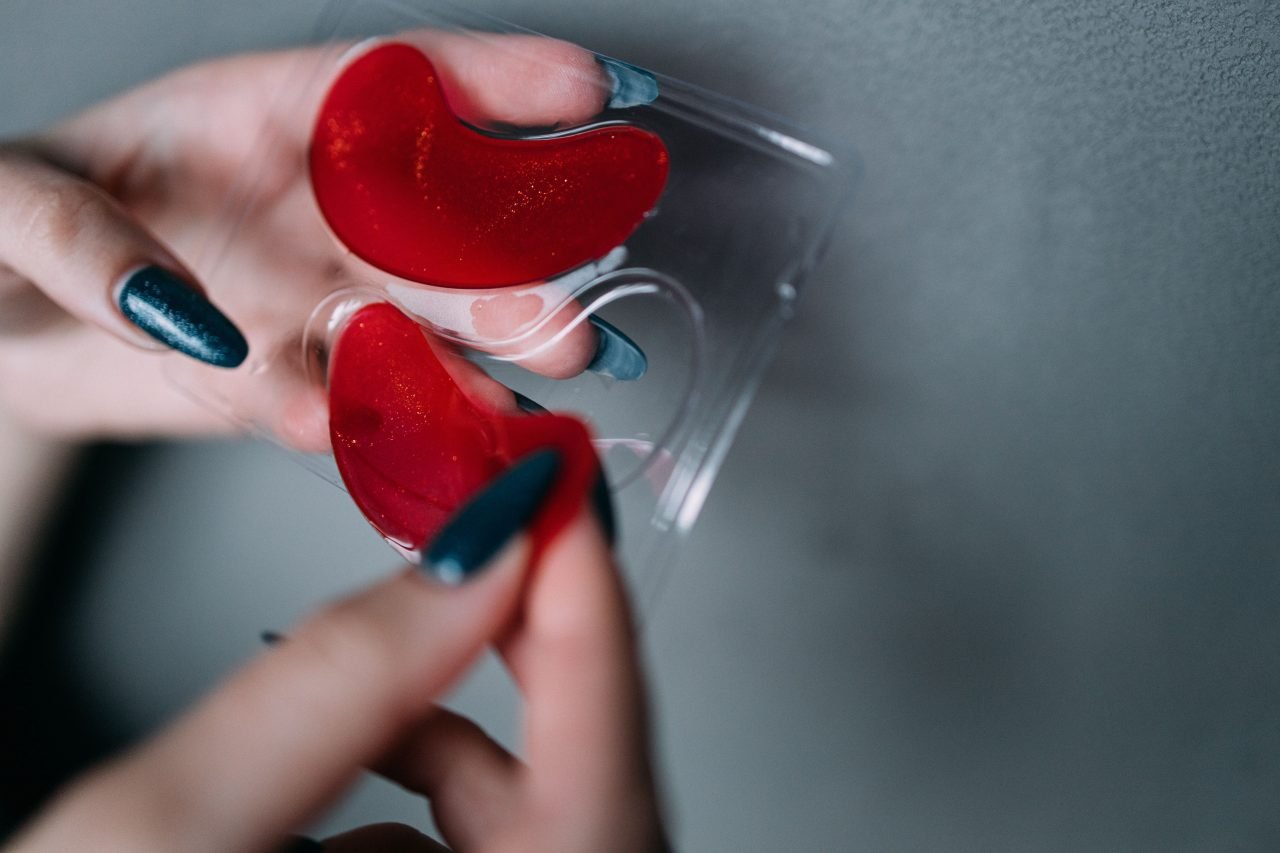
The main material in most pimple patches is hydrocolloid, a substance that’s been used in wound care since the early 1980s, long before anyone thought to cut it into small dots for acne. A 2025 review in the Journal of Clinical Medicine explains that hydrocolloid dressings are made of long-chain polymers — things like carboxymethylcellulose, pectin, and gelatin — that form a gel when they contact moisture, absorbing fluid from a wound while keeping the area protected and hydrated. That gel-forming, fluid-absorbing action is the whole mechanism — everything else the patch does builds on top of it.
Many patches, including this one, add salicylic acid on top of the hydrocolloid base. Salicylic acid is a beta hydroxy acid that’s oil-soluble, which lets it get into a clogged pore and loosen the “glue” holding dead skin cells together — the technical term is comedolytic, meaning it helps break down the plug inside a pore. The American Academy of Dermatology’s 2024 acne treatment guidelines classify salicylic acid as a “conditionally recommended” option, one tier below the “strongly recommended” status given to benzoyl peroxide and retinoids.
▶ Watch Related Video (YouTube)
Some patches also add tea tree oil, whose antibacterial activity mostly comes from a compound called terpinen-4-ol. A 2015 review in the International Journal of Antimicrobial Agents notes that terpinen-4-ol typically makes up about 40% of tea tree oil, and that non-specific cell membrane damage is a major mechanism behind its antibacterial action against acne-related bacteria. Note that this specific product doesn’t publish the exact concentration of salicylic acid or tea tree oil it uses, so the research below reflects the ingredients in general — not necessarily the exact strength in this patch.
Why Patches Work So Well on Popped Pimples
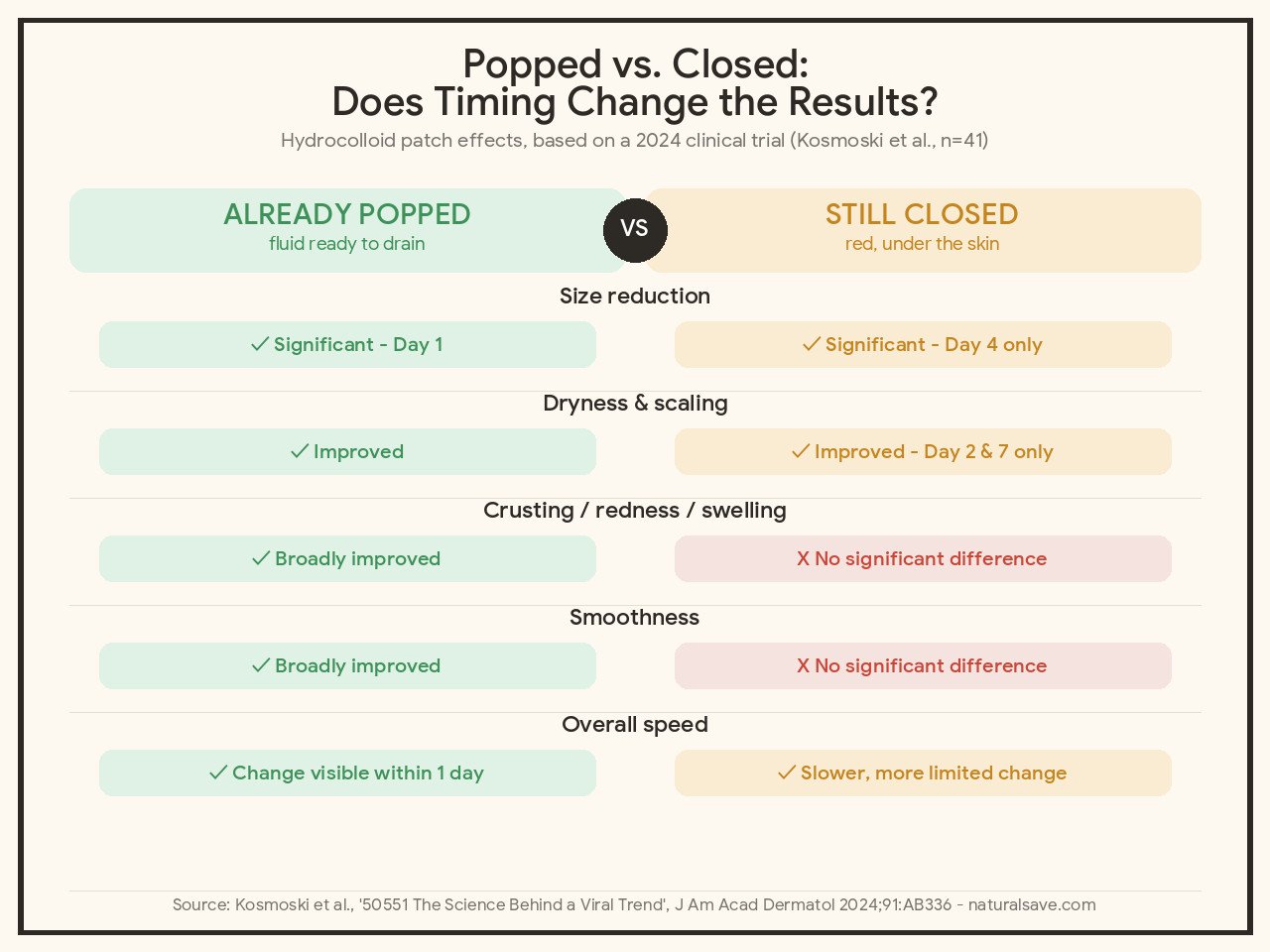
Here’s where the research gets specific about when these patches actually shine. A 2024 randomized controlled trial presented at the American Academy of Dermatology tested hydrocolloid patches on 41 people aged 12 to 35, each with at least two inflamed pimples — one of which was already capable of being popped. On the already-popped pimples, the patches produced a statistically significant improvement in wound appearance within just one day (p=0.001), with continued significant improvement at day four (p=0.007). Smoothness, crusting, redness, size, swelling, and dryness all showed measurable improvement at various points over the two-week study.
This tracks with what an earlier study found too: a 2006 pilot trial of 20 people with mild to moderate acne, cited in the same 2025 hydrocolloid review, found a significant reduction in acne severity and inflammation from day three through day seven when comparing hydrocolloid dressings to plain skin tape. The pattern across both studies is consistent: when there’s already fluid to absorb — pus, oil, inflammatory buildup from a pimple that’s already come to a head — the patch has something to actually do.
What Happens When You Use One on a Closed Pimple
The same 2024 trial also tracked closed pimples — the kind that are still red, tender, and under the skin, with nothing to drain yet. The results were real, but noticeably smaller: closed pimples showed a significant reduction in size by day four, and significantly less dryness and scaling on days two and seven, but didn’t show the same broad improvement across every measure that popped pimples did. In other words, the patch still did something — just not nearly as much, and not nearly as fast.
The salicylic acid research tells a similar story. The same AAD guideline notes that the single randomized trial supporting salicylic acid’s “conditionally recommended” status found a 25% greater reduction in inflammatory lesions and an 11% greater reduction in open comedones compared to a placebo, but no significant difference for closed comedones — the exact kind of early, not-yet-open pimple a patch is often reached for.
Tea tree oil follows a different but related pattern: strong in an individual study, less certain overall. A 2007 double-blind, placebo-controlled trial of 60 people found that 5% tea tree oil gel was 3.55 times more effective than placebo at reducing total lesion count, and 5.75 times more effective on an acne severity index, over 45 days. That’s a genuinely strong result. But the AAD’s 2024 guideline concluded that evidence for tea tree oil, along with other plant-based acne ingredients, was still insufficient to issue a formal recommendation either way — not proof it doesn’t work, but a sign the research base isn’t deep enough yet for a dermatology body to put its full weight behind it.
So When Should You Actually Reach for a Patch?
Put together, the research points to a fairly simple rule of thumb: a patch is doing the most work when there’s something for it to absorb. If a pimple has already come to a head — visibly whitish, ready to drain, or already leaking a little — that’s the moment a patch like COSRX Master Patch Intensive is built for, and it’s also the scenario the strongest clinical results come from.
If the pimple is still closed, red, and sitting under the skin, a patch isn’t useless — it still creates a protective barrier that can stop you from picking at it, plus whatever modest benefit the salicylic acid or tea tree oil is contributing. Just don’t expect it to look dramatically smaller by morning the way an already-popped pimple might. Adjusting that expectation is really the whole difference between feeling let down by a patch and using it well.
The Bottom Line
The gap between “this patch worked amazingly” and “this patch did almost nothing” usually isn’t about the brand, the price, or even the exact blend of ingredients — it’s about whether the pimple underneath had already come to a head. Popped pimples give hydrocolloid something concrete to absorb, and the research backs that up clearly. Closed pimples get a smaller, slower benefit, mostly from the protective barrier and whatever the added salicylic acid or tea tree oil can do at that stage.
None of that means skipping a patch on a closed pimple is the smarter move — a barrier that stops you from picking is still worth something. It just means going in with the right expectations, whether that’s with COSRX Master Patch Intensive or any other hydrocolloid patch on your shelf.
Sources
- Nguyen N, et al. “Narrative Review of the Use of Hydrocolloids in Dermatology: Applications and Benefits.” J Clin Med. 2025;14(4):1345.
- Reynolds RV, et al. “Guidelines of care for the management of acne vulgaris.” J Am Acad Dermatol. 2024;90(5):1006.e1-1006.e30.
- Kosmoski G, et al. “50551 The Science Behind a Viral Trend: Demonstrating Safety and Efficacy of Hydrocolloid Patch for Facial Acne.” J Am Acad Dermatol. 2024;91:AB336.
- Enshaieh S, Jooya A, Siadat AH, Iraji F. “The efficacy of 5% topical tea tree oil gel in mild to moderate acne vulgaris: a randomized, double-blind placebo-controlled study.” Indian J Dermatol Venereol Leprol. 2007;73(1):22-25.
- Hammer KA. “Treatment of acne with tea tree oil (melaleuca) products: A review of efficacy, tolerability and potential modes of action.” Int J Antimicrob Agents. 2015;45(2):106-110.