A “7%” on a toner bottle looks like a number you can judge at a glance. It is more useful once you read the other numbers printed next to it. This post goes through the label of The Ordinary Glycolic Acid 7% Exfoliating Toner and compares it with what the FDA says about alpha hydroxy acids (AHAs), so you know what the percentage, the pH, and the sunburn warning are telling you.
Disclosure: this post contains an affiliate link, and I may earn a commission if you buy through it, at no extra cost to you. This is general information, not medical advice. If you have a skin condition or a reaction to a product, talk with a dermatologist.
What the label says about 7% glycolic acid
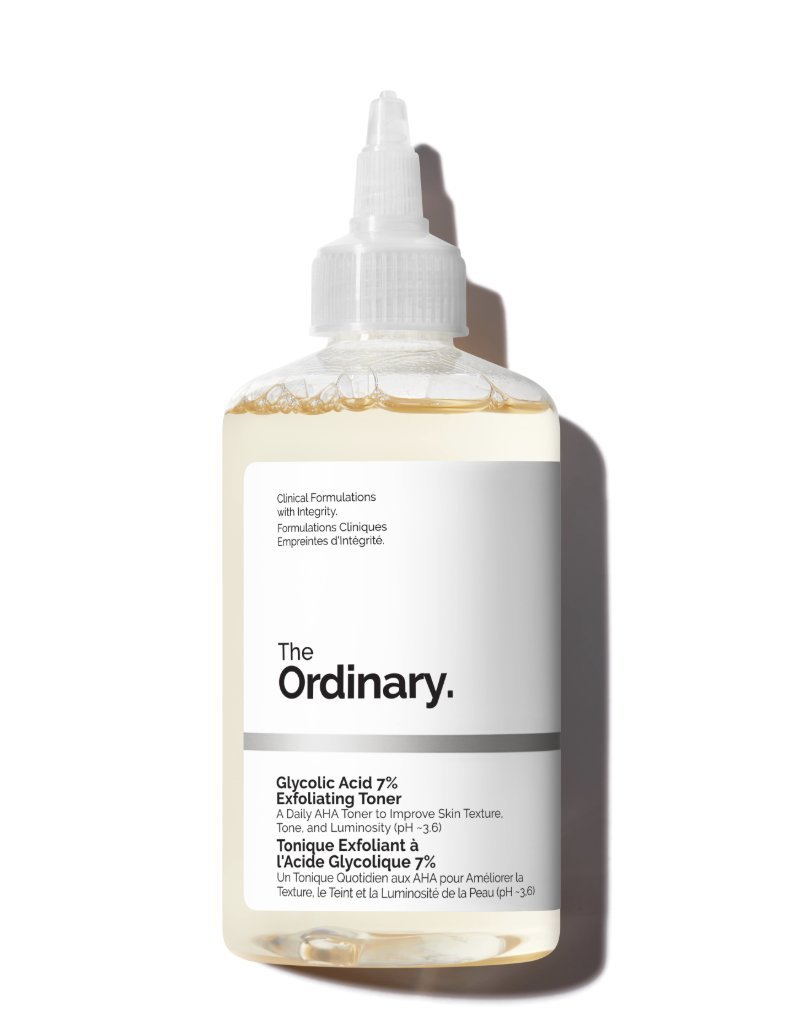
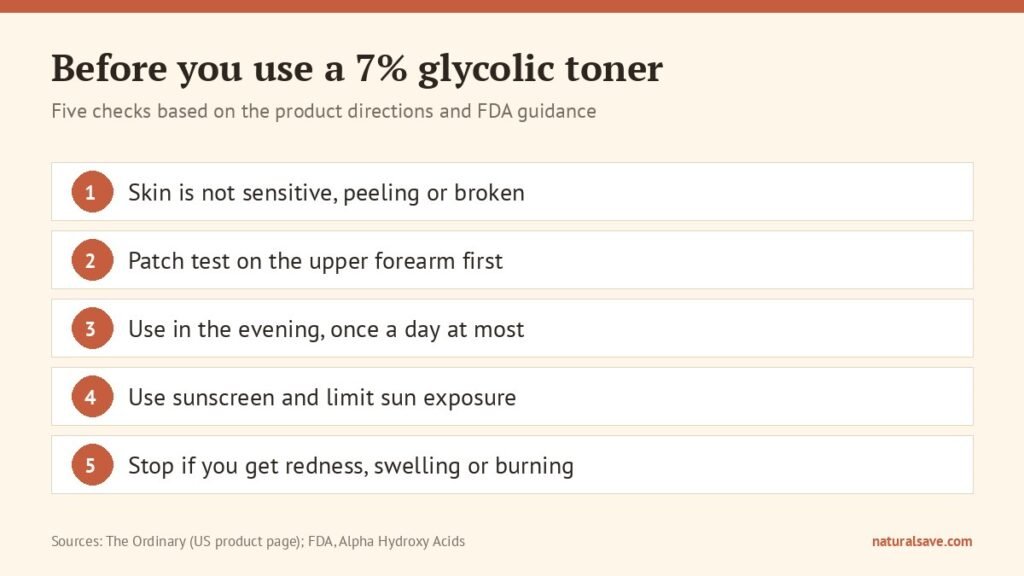
The front of the bottle reads “A Daily AHA Toner to Improve Skin Texture, Tone, and Luminosity (pH ~3.6).” On the brand’s US product page, the directions are short: apply once daily, ideally in the evening, to the face and neck with a cotton pad or fingers, and do not rinse it off. The page also says not to use it on sensitive, peeling, or compromised skin, and it advises a patch test first.
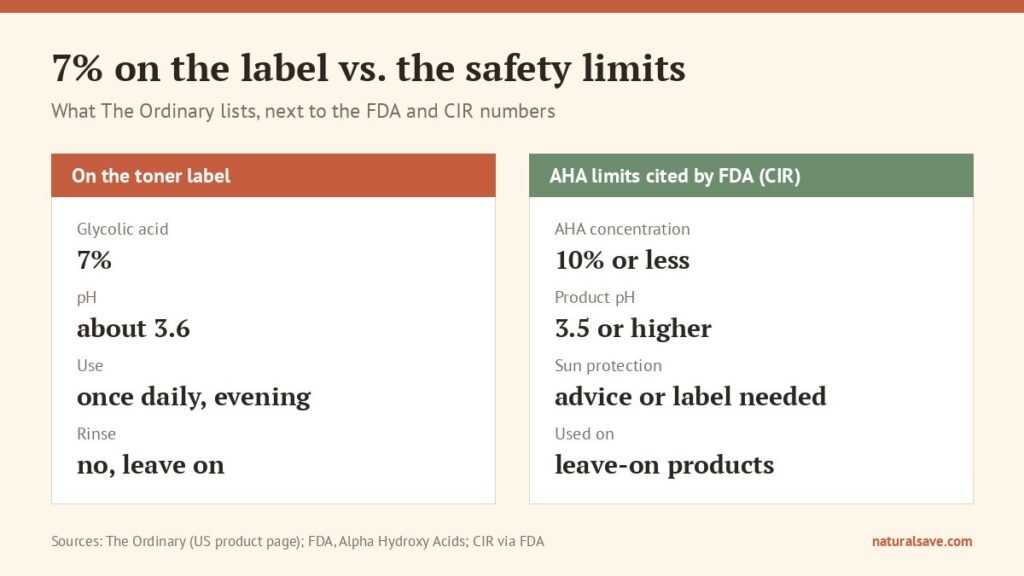
Glycolic acid is one of the two most common AHAs in cosmetics, along with lactic acid, according to the FDA. The FDA also notes that the Cosmetic Ingredient Review (CIR) expert panel considered AHAs safe in leave-on products at 10% or less, at a pH of 3.5 or higher, when the product is formulated to protect against extra sun sensitivity or comes with sun protection directions. A 7% toner sits under that concentration ceiling.
Why pH matters as much as the percentage
A percentage alone does not tell you how strong an acid product feels on skin, because pH changes how much of the acid is active. The label lists about 3.6, just above the 3.5 floor in the CIR conditions, and the brand describes it as a balance between salt and acidity. Those are the label’s numbers and a safety guideline, not a prediction of how your skin will react.
Why the label has a sunburn alert
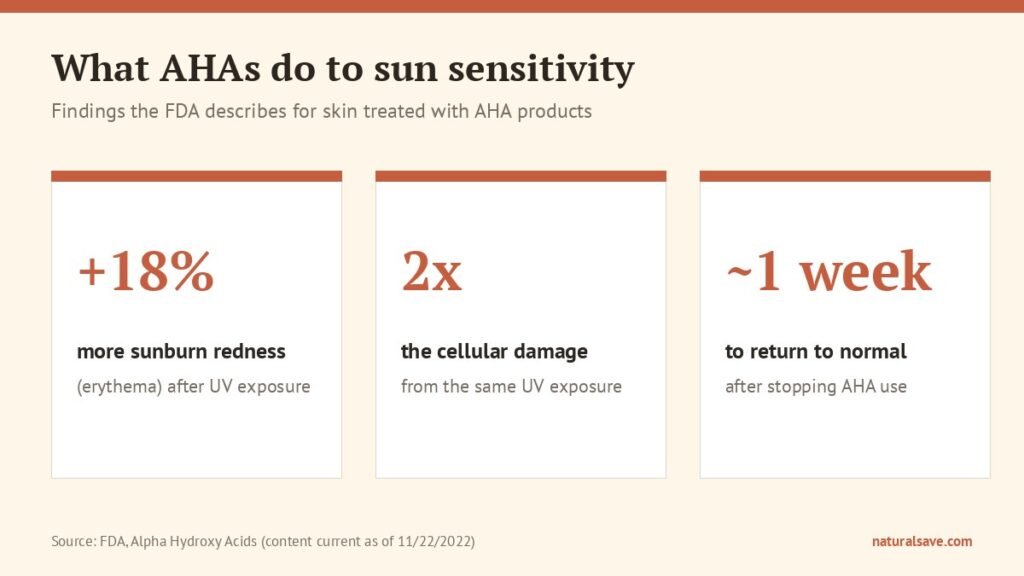
AHAs loosen the top layer of dead skin cells, and the FDA says that can make skin more sensitive to the sun. In a study the FDA cites, skin treated with AHA products showed about 18% more redness after UV exposure and twice the cellular damage, and sensitivity returned to normal about a week after people stopped using the product.
The toner label carries the same message as a Sunburn Alert: use a sunscreen, wear protective clothing, and limit sun exposure while using it. This is also why the brand suggests the evening routine. Sunscreen the next morning is part of using the product, not an optional extra.
What to check before you start
Beyond the sun warning, the brand’s directions point to skin condition. If your skin is already irritated, peeling, or has a broken barrier, the page says this is not the product to use. A patch test on a small area of the upper forearm is the brand’s suggested first step.
If your skin feels tight after an exfoliating step, our posts on whether a hyaluronic acid serum can leave skin drier and what “ceramide” on a moisturizer label means may help you read the next product you add.
The bottom line
The 7% on this toner is below the 10% limit the FDA cites, and the pH of about 3.6 is just above the 3.5 floor. The part that needs the most attention is not the percentage but sun exposure: pair it with sunscreen, use it only as directed, and skip it if your skin is sensitive or damaged. You can see the current listing for The Ordinary Glycolic Acid 7% Exfoliating Toner on Amazon.