Walk down any skincare aisle in October and the word “ceramide” is everywhere: on cleansers, lotions, and thick night creams, usually in large letters. On the ingredient list, though, that one word can mean different things, and the amount of the real thing can be tiny. Here’s how to tell what’s in the jar, what research on ceramide moisturizers actually shows, and what dermatologists say counts for more.
This post contains affiliate links. If you make a purchase through them, we may earn a small commission, at no extra cost to you.
This article is for general informational purposes only and is not medical advice. If your skin stays very dry, itchy, or irritated, talk to a dermatologist.
What “Ceramide” Can Mean on a Label
The outer layer of your skin works a bit like a brick wall. Skin cells are the bricks, and a fatty matrix is the mortar. That matrix does much of the work of keeping water in, according to a review of skin barrier lipids. Ceramides make up roughly half of those lipids by weight, alongside cholesterol and free fatty acids, as described in a 2023 meta-analysis.
Moisturizers borrow from that blueprint in two ways. Some use skin-identical ceramides, which match the types found in skin and appear on labels as Ceramide NP, AP, or EOP. Others use pseudo-ceramides, lab-made molecules designed to imitate what a ceramide does. One ingredient database notes that a common pseudo-ceramide, hydroxypropyl bispalmitamide MEA (often sold as Ceramide PC-104), lacks the sphingosine backbone that defines a true ceramide.
Neither type is automatically better. But a jar that says “ceramide” in big letters doesn’t tell you which kind you’re getting, or how much.
Reading a Real Ingredient List
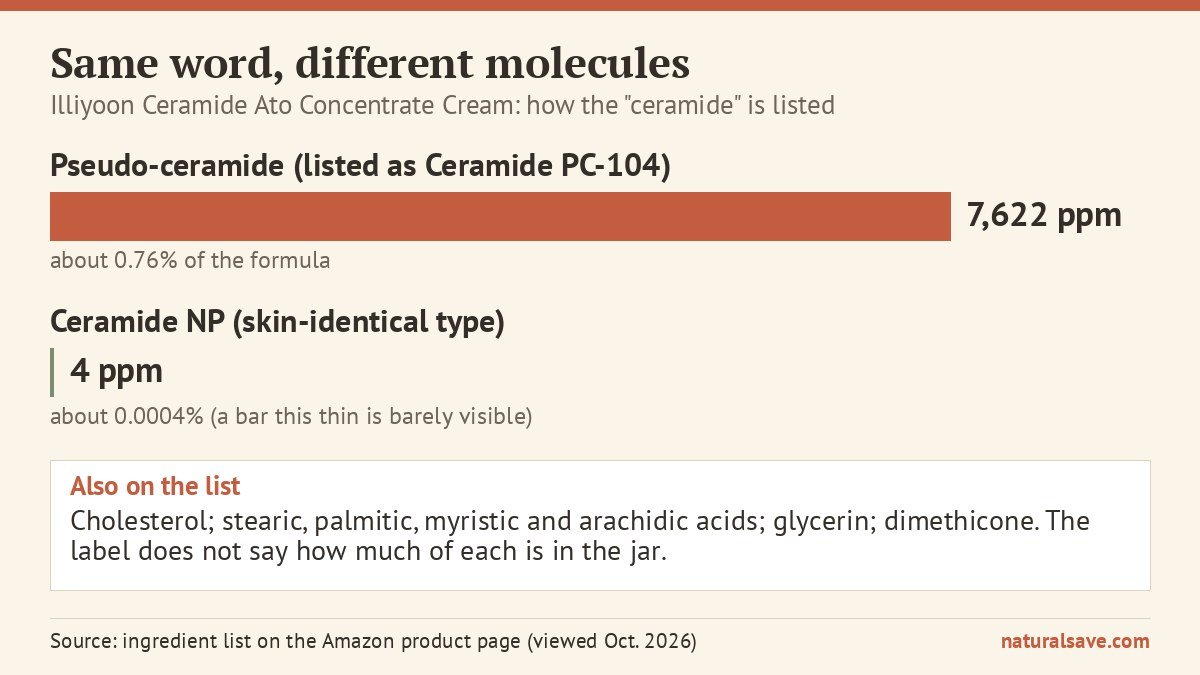
As an example, take Illiyoon’s Ceramide Ato Concentrate Cream, a Korean moisturizer that ranks among the top-selling face moisturizers on Amazon. The ingredient list on its product page includes hydroxypropyl bispalmitamide MEA, labeled Ceramide PC-104, at 7,622 ppm, or about 0.76%. Ceramide NP, the skin-identical form, appears at 4 ppm, or about 0.0004%. Neither number is a flaw on its own. It just means the “ceramide” in this cream is mostly the pseudo-ceramide kind.
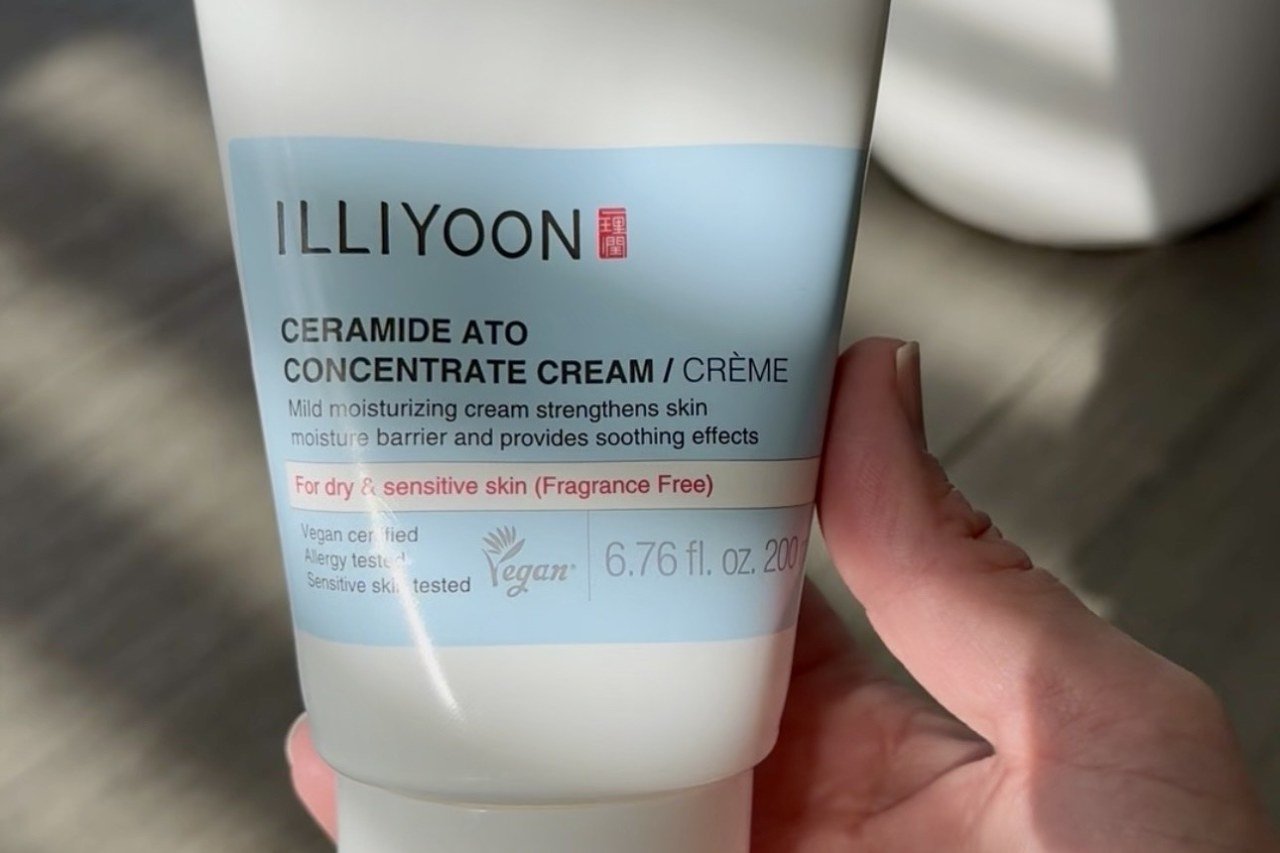
The rest of the list reads like a barrier-care formula. Cholesterol and several fatty acids (stearic, palmitic, myristic, and arachidic acid) sit alongside glycerin and dimethicone, which help hold water in and slow evaporation from the surface. The cream is labeled fragrance-free. What the list can’t tell you is how much of each lipid is in the jar, so there’s no way to know whether the mix resembles skin’s own.
Reviewers on Amazon (4.7 stars across 8,697 ratings) often describe it as thick at first but quick to absorb, and several say it didn’t irritate sensitive skin. One reviewer found it too heavy for summer heat.
For any ceramide cream, a few quick checks help. Look for which type of ceramide is listed. See whether cholesterol and fatty acids come with it, since skin’s barrier uses all three. Check that it says “fragrance-free” rather than “unscented.” And look for plain workhorses like glycerin, which a label can easily bury behind the ceramide headline.
What the Research Shows (and Doesn’t)
The best pooled evidence is a 2023 meta-analysis in the Indian Journal of Dermatology of five small randomized trials in people with atopic dermatitis. For transepidermal water loss (TEWL), a measure of how much water escapes through skin, ceramide moisturizers were not significantly different from other moisturizers. On a clinical severity score, the ceramide group did slightly better. The authors noted small samples and wide variation between studies, and they excluded pseudo-ceramide products altogether.
For pseudo-ceramides, the closest evidence is a 2024 randomized trial in the Journal of Cosmetic Dermatology. It followed 52 Japanese women with dry, sensitive skin and weak barrier function who used either a pseudo-ceramide spray or a plain commercial spray twice a day for four weeks. Skin hydration on the cheek, TEWL around the mouth, and visible flaking all improved in the pseudo-ceramide group, while the control group showed no significant change.
There are caveats. The study was run at Kao Corporation, the company that makes the pseudo-ceramide it tested, and it was single-blind. The test spray also contained cholesterol and a plant extract that the control spray lacked, so the pseudo-ceramide’s own effect can’t be separated out, as the authors acknowledge. And the molecule tested was a different one from PC-104, so its results don’t carry over to this cream. We couldn’t find a published trial of this specific cream.
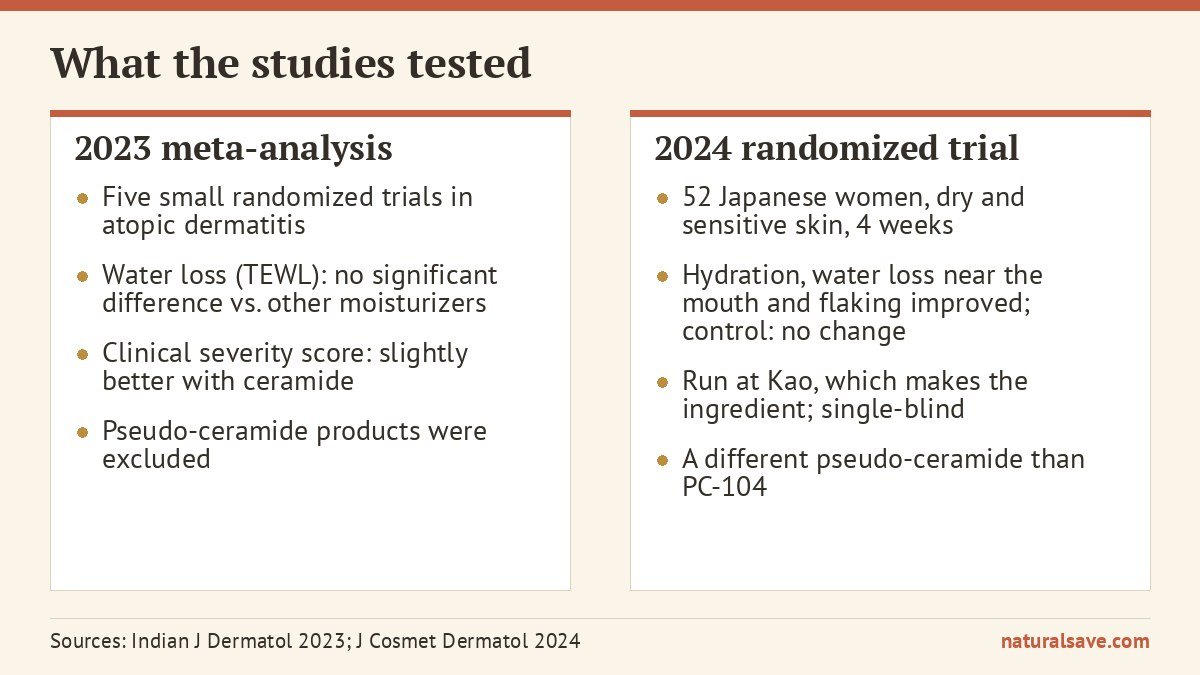
A fair summary: ceramide-containing moisturizers look helpful, but evidence that ceramides specifically beat other good moisturizers is thin.
What Matters More Than the Ceramide
The American Academy of Dermatology puts the basics ahead of any single ingredient. It says creams and ointments add more moisture than lotions, and it recommends products labeled fragrance-free, because “unscented” ones can contain chemicals that mask odors and may irritate dry skin. Its list of ingredients to look for includes glycerin, dimethicone, petrolatum, and hyaluronic acid. Ceramides aren’t named on that particular page.
Timing counts too. The AAD suggests applying moisturizer while skin is still damp after a shower, after washing your hands, and whenever skin feels dry, and keeping showers to five to ten minutes in warm water. A humidifier in the bedroom can help in dry months. We covered the same damp-skin-then-seal logic in our post on hyaluronic acid serums, and we took a similar label-reading approach to the “96%” on snail mucin essence.
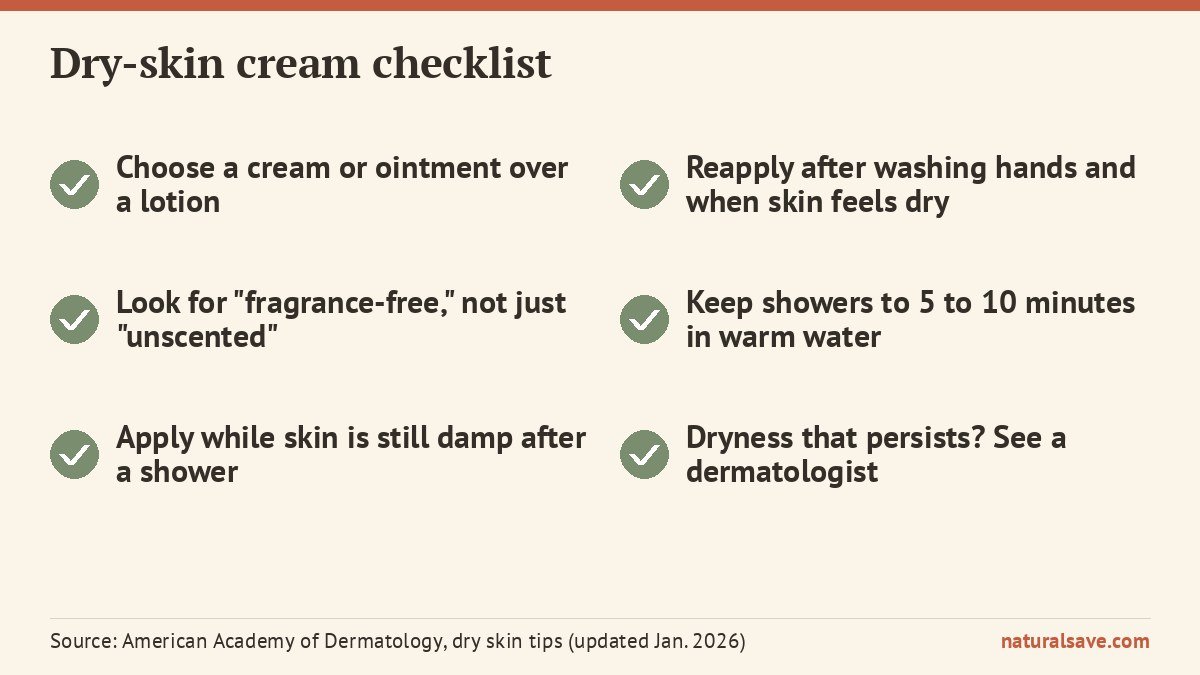
If dryness persists after a few weeks of this routine, the AAD says to see a board-certified dermatologist, since conditions like atopic dermatitis, psoriasis, or kidney disease can cause very dry skin.
The Bottom Line
“Ceramide” on a label is a starting point, not a verdict. Check which type it is, whether cholesterol and fatty acids come along, and whether the cream is fragrance-free. Illiyoon’s cream is one example of a pseudo-ceramide formula, and the research suggests ceramide creams can help, though not necessarily more than other well-made moisturizers. Applying a fragrance-free cream to damp skin, several times a day, is the habit the AAD stresses most.
Sources
- American Academy of Dermatology, Dermatologists’ top tips for relieving dry skin (updated January 2, 2026)
- Nugroho WT, et al. The Efficacy of Moisturisers Containing Ceramide Compared with Other Moisturisers in the Management of Atopic Dermatitis: A Systematic Literature Review and Meta-Analysis. Indian Journal of Dermatology, 2023
- Akahane T, et al. Efficacy of Pseudo-Ceramide Absorption Into the Stratum Corneum and Effects on Transepidermal Water Loss and the Ceramide Profile: A Randomized Controlled Trial. Journal of Cosmetic Dermatology, 2024
- van Smeden J, et al. The important role of stratum corneum lipids for the cutaneous barrier function. Biochimica et Biophysica Acta, 2014
- Skinsort, Hydroxypropyl Bispalmitamide MEA
- Illiyoon Ceramide Ato Concentrate Cream, Amazon product page (ingredient list and ratings viewed October 2026)