
One softgel of this supplement delivers 5,000 IU of vitamin D — 25 percent more than the official daily upper limit set by U.S. health authorities. Here’s what that actually means, and whether the coconut oil and vitamin K2 in the same capsule change the picture.
This post contains affiliate links. If you make a purchase through them, we may earn a small commission — at no extra cost to you.
This article is for informational purposes only and is not medical advice. Talk to your doctor before starting any new supplement, especially at doses above standard recommendations.
Why This Supplement’s Vitamin D Dose Is Higher Than the Official Recommendation
NIH’s Office of Dietary Supplements sets the Recommended Dietary Allowance (RDA) for vitamin D at 15 mcg (600 IU) a day for most adults, rising to 20 mcg (800 IU) for adults over 70. That’s the amount believed to meet the needs of nearly everyone who’s healthy.
The same NIH fact sheet also sets a Tolerable Upper Intake Level (UL) — the ceiling unlikely to cause harm — at 100 mcg, or 4,000 IU, a day for adults. A single softgel of this supplement provides 5,000 IU, which puts it about 25 percent above that official ceiling, and more than eight times the standard RDA.
So does exceeding that number actually put you at risk?
▶ Watch Related Video (YouTube)
Does Exceeding the Official Limit Actually Mean It’s Dangerous?
Not necessarily — and this is where the nuance matters. NIH’s own fact sheet acknowledges that signs and symptoms of vitamin D toxicity are unlikely at daily intakes below 250 mcg, or 10,000 IU — a dose twice as high as this product’s 5,000 IU. Actual toxicity cases have mostly involved manufacturing errors or people taking far larger amounts for extended periods, not a single daily softgel at this level.
That said, NIH doesn’t treat the UL as a hard line where everything below it is automatically fine. The agency notes that even intakes below the UL might have adverse effects over time, and recommends keeping blood levels of 25-hydroxyvitamin D under roughly 125 to 150 nmol/L — because levels in the 75 to 120 nmol/L range have been associated in some research with higher all-cause mortality, certain cancers, cardiovascular events, and falls in older adults. In other words: more isn’t automatically better, even if it’s technically not “toxic.”
Sports Research’s Vegan Vitamin D3 + K2 lists 5,000 IU of vitamin D3 per softgel on the label. If you’re taking it daily long-term, especially alongside other vitamin D sources like sunlight or fortified foods, a blood test to check your actual 25-hydroxyvitamin D level is the most reliable way to know where you actually stand — guessing from the label alone doesn’t tell you that.
There’s another marketing claim on this label worth checking: the coconut oil.
Does Coconut Oil Actually Help You Absorb Vitamin D?
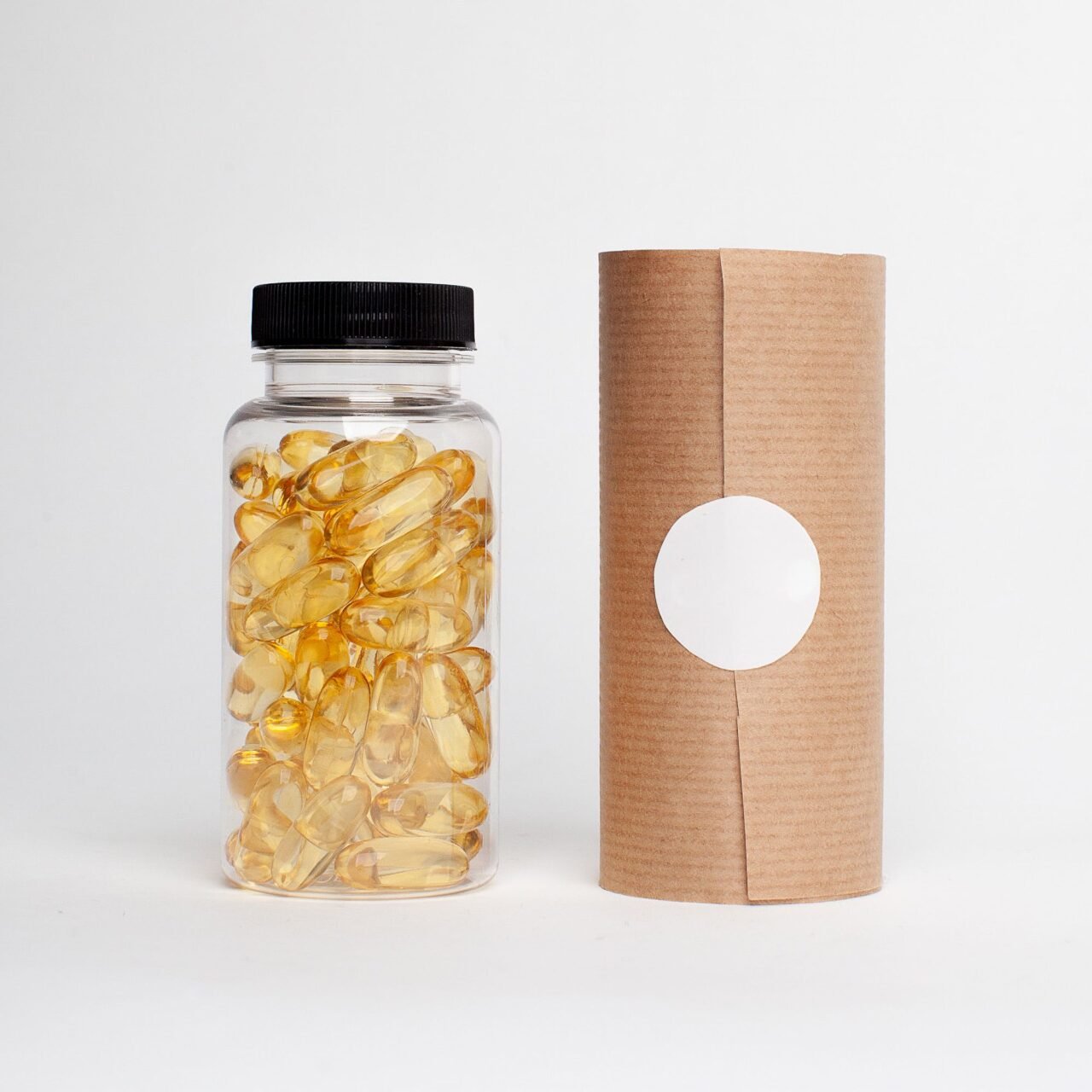
Vitamin D is a fat-soluble vitamin, and NIH’s fact sheet confirms that the concurrent presence of fat in the gut enhances vitamin D absorption — but it also notes that some vitamin D is absorbed even without dietary fat. Absorption happens through simple passive diffusion and specific carrier proteins in the small intestine, and both major forms of vitamin D are described as “well absorbed” regardless of form.
So pairing vitamin D with a fat source like coconut oil is a reasonable, science-backed formulation choice — it’s not a marketing invention. What wouldn’t be accurate is claiming that a dry vitamin D capsule without any fat wouldn’t be absorbed at all; NIH’s own data doesn’t support that stronger claim. The honest version is that fat helps, not that fat is required.
The other ingredient on this label — vitamin K2 — tells a very different safety story.
What About the 100mcg of Vitamin K2? Is That Safe?
NIH sets the Adequate Intake (AI) for vitamin K at 120 mcg a day for adult men and 90 mcg for adult women — this supplement’s 100mcg falls right between those two figures.
What’s more notable is what NIH didn’t set: a Tolerable Upper Intake Level. The Food and Nutrition Board didn’t establish a UL for vitamin K because of its low potential for toxicity, stating that no adverse effects from vitamin K consumption through food or supplements have been reported in humans or animals. That’s a meaningfully wider safety margin than vitamin D has.
NIH also cites research showing that MK-7, the form of vitamin K2 used in this supplement, is well absorbed and has a longer half-life than vitamin K1 — a reasonable formulation choice backed by the data, rather than an arbitrary one. Vitamin K2 is commonly discussed for its role in activating proteins involved in bone and vascular health, though that’s a general mechanism in the research literature rather than something this specific product has been clinically tested to prove.

The Bottom Line
The 5,000 IU of vitamin D3 in this supplement does exceed NIH’s official upper limit of 4,000 IU — that part of the label math is accurate. But exceeding the UL isn’t the same as being in the toxicity range, which NIH places closer to 10,000 IU a day. If you’re taking a dose like this consistently, a periodic blood test is a more reliable way to know where you stand than guessing from the label. The coconut oil is a legitimate absorption aid, not just a marketing flourish, since fat does enhance vitamin D uptake. And the 100mcg of vitamin K2 sits within NIH’s recommended range for an adult, with no official upper limit to worry about at all.
Read the label again, this time with the actual context behind the numbers.