There’s one number you see on turmeric supplement bottles and in ads again and again: black pepper makes curcumin absorb 2,000% better. It’s repeated so often that it feels like settled science. The original study is from 1998, though, and a newer independent trial found that adding the same black pepper compound did not help. Here’s where the number came from, what’s changed since, and one safety detail that labels rarely mention.
This article is for general informational purposes only and is not medical advice. Talk to your doctor before starting any new supplement. This post also contains an affiliate link. If you make a purchase through it, we may earn a small commission, at no extra cost to you.
Where the “2,000%” Number Comes From
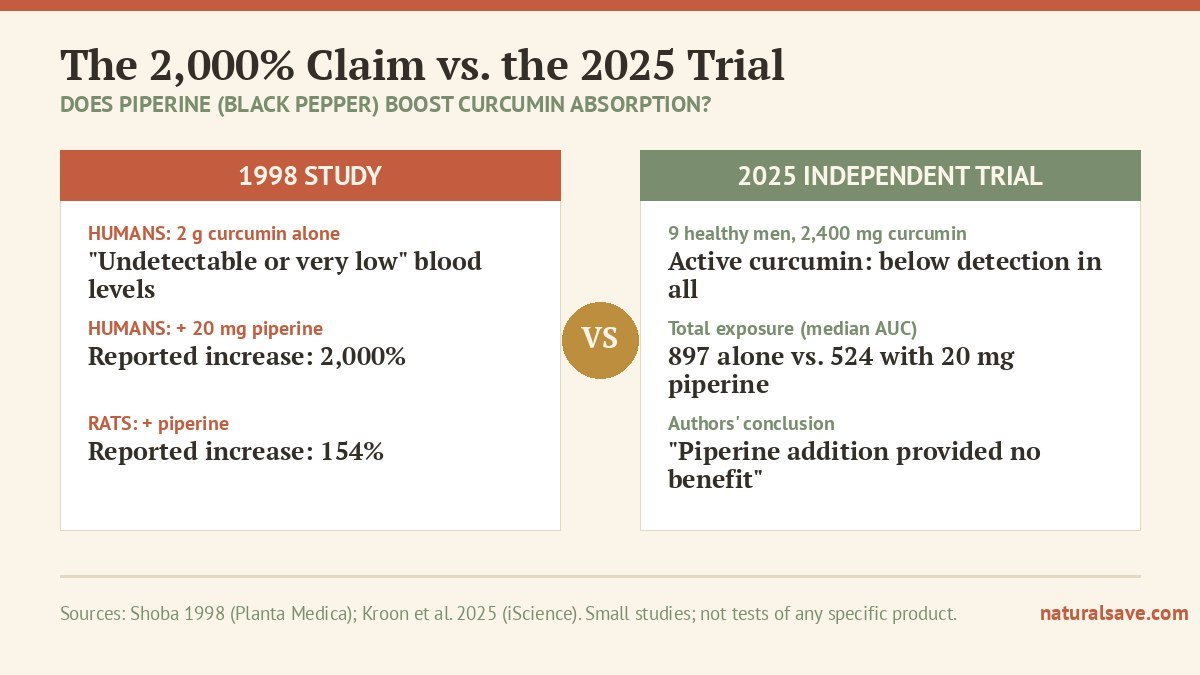
The figure traces back to a 1998 study in Planta Medica that tested curcumin, the main active compound in turmeric, with and without piperine, the active compound in black pepper. In rats, adding piperine raised curcumin bioavailability by 154%. In healthy human volunteers, a 2-gram dose of curcumin alone produced blood levels that were “either undetectable or very low.” With 20 mg of piperine added, the study reported a 2,000% increase.
That context matters. When the starting point is close to zero, even a tiny absolute rise turns into a huge percentage. A jump from almost nothing to a little something is a real change in the numbers, but it says little about whether enough curcumin reaches your tissues to matter.
Later animal work shows the picture is more complicated than “add pepper, absorb more.” A rat study found that the effect depended on timing and dose ratio. Giving piperine at a 20:1 ratio at the same time raised curcumin exposure about 1.7-fold, while giving piperine about six hours earlier raised it about sixfold. The effect on the body’s curcumin-processing enzymes had reversed by eight hours. Rats are not people, and a typical supplement doesn’t control timing that precisely.
What a 2025 Independent Trial Found
A 2025 crossover study in iScience tested the question directly in nine healthy men. They received 600 mg of curcumin, 2,400 mg of curcumin, and 2,400 mg of curcumin plus 20 mg of piperine, along with two specialized formulations. The researchers measured both the active, unconjugated form of curcumin and the total, which includes conjugated forms the body has already modified for excretion.
The unconjugated curcumin level stayed below the detection limit in every participant after the plain and piperine doses. The total curcumin exposure was not higher with piperine: the median was 524 nM·h with it versus 897 without. The authors wrote that piperine “did not accelerate or increase the systemic uptake,” and their summary says plainly that piperine addition “provided no benefit.”
The study also helps explain why. Most curcumin that reaches the blood is already conjugated, and the authors note that these conjugates struggle to cross cell membranes. So a higher “total curcumin” number can look like better absorption without meaning more active curcumin is available to your cells.
There are limits to keep in mind. This was nine men, a single dose, and none of the products tested was the one you might have at home. It doesn’t prove piperine never helps anyone. It does mean the 2,000% claim isn’t something you can count on. If you’ve wondered whether “better absorbing” forms of other supplements live up to the label, we looked at the same question for magnesium glycinate.
What We Actually Know About Benefits
Better absorption only matters if curcumin does something worth absorbing it for. The National Center for Complementary and Integrative Health (NCCIH) is cautious here: it says there isn’t enough evidence to definitively conclude that turmeric or curcumin is beneficial for any health purpose. For knee osteoarthritis, it describes the early evidence as positive but in need of higher-quality studies, and it says early research suggests curcumin might improve some fatty liver measures.
A 2022 meta-analysis of 29 randomized trials with 2,396 people found that curcumin and turmeric extract may improve symptoms and inflammation in arthritis. Its authors added that the trials were low in quality and small in number, so the conclusions should be interpreted carefully. Phrases like “supports joint comfort” on labels are structure-function claims that the FDA has not evaluated.
The Part Labels Don’t Mention: Your Liver
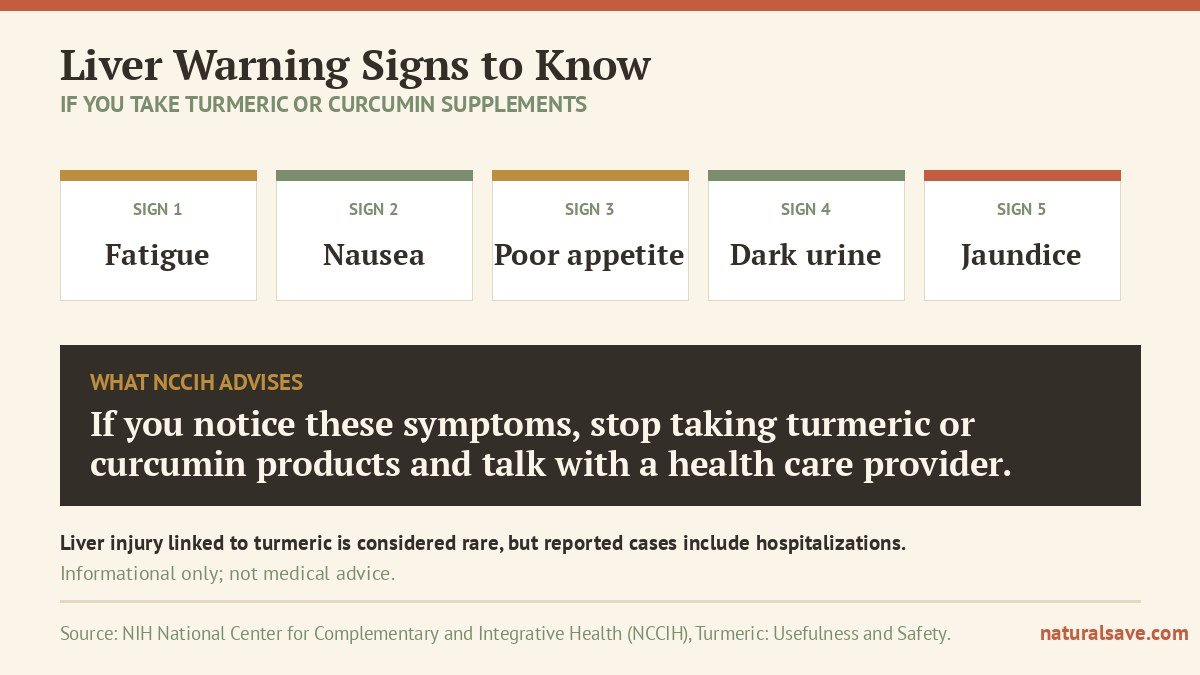
This is where the story turns. NCCIH notes that liver damage has been reported in some people who took curcumin products with increased bioavailability. It lists the warning signs: fatigue, nausea, poor appetite, dark urine, or jaundice. If you notice them, the guidance is to stop and talk with a health care provider.
A case series from the U.S. Drug-Induced Liver Injury Network reviewed ten turmeric-related cases enrolled since 2011. Nine were hepatocellular liver injury, five people were hospitalized, and one person died of acute liver failure. Turmeric was confirmed in all seven products that could be tested, and three of those also contained piperine. Seven of the ten patients carried a gene variant called HLA-B*35:01, far more often than in the general population. The authors suggested that rising use, and perhaps the pairing with black pepper, could be part of the trend.
To keep this in proportion: the NIH’s LiverTox database calls turmeric the most common cause of clinically apparent herbal-related liver injury in the United States, but estimates that such injury is “probably very rare,” in the range of 1 in 10,000 to 1 in 100,000 people exposed. It’s also a widely used product. In a national survey analysis in JAMA Network Open, turmeric-containing products were the most commonly used of six botanicals linked to liver injury.
If You Already Take One
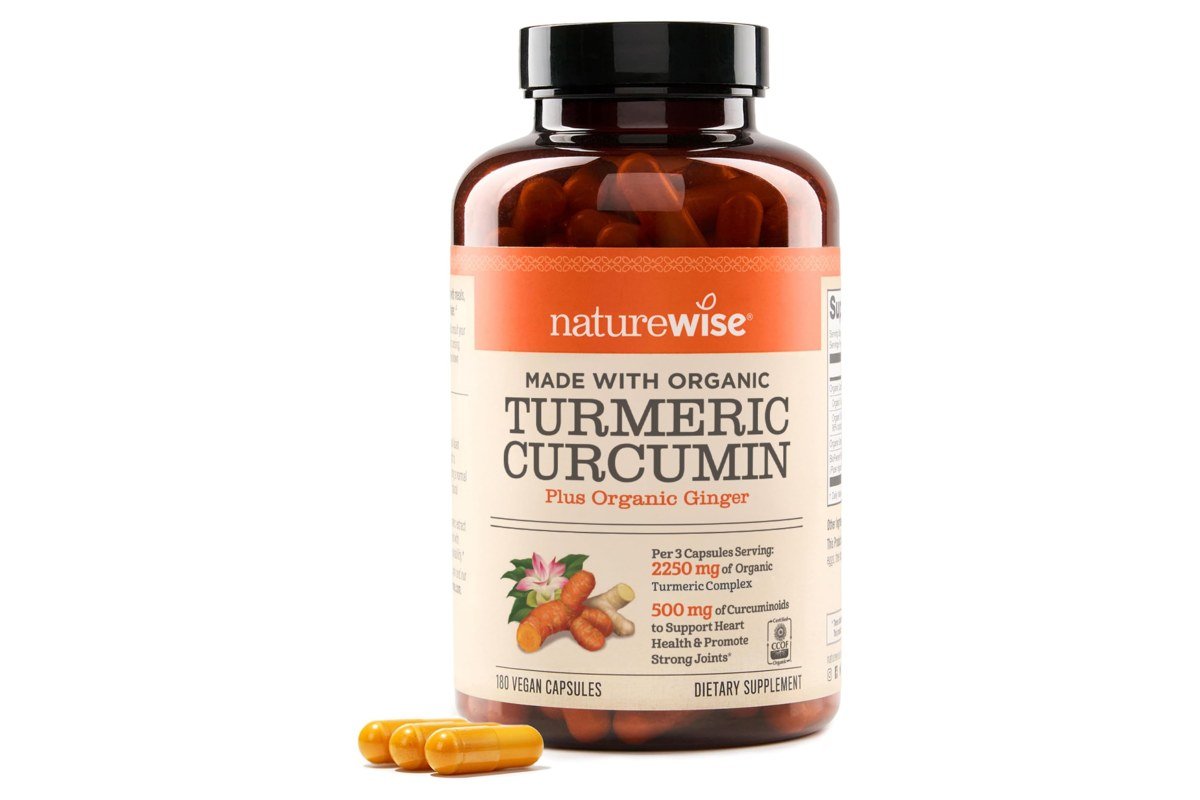
A popular example is NatureWise Turmeric Curcumin, which combines turmeric root, a 95% curcuminoid extract, organic ginger, and BioPerine, a patented black pepper extract. Three capsules deliver 500 mg of curcuminoids, and the label directs taking three capsules with each meal or as your health care provider recommends. We can’t say whether any of the studies above reflect how this particular product behaves, and the DILIN report doesn’t name brands, so nothing here points to a problem with it specifically.
If you take any curcumin supplement, a few practical points follow from the sources. NCCIH says to talk with your provider before using any herbal product if you take medicine, because some herbs and drugs interact in harmful ways. Interactions with blood thinners, antiplatelet drugs, diabetes medicines, and chemotherapy have been described in lab and animal studies but are not well studied in people. We covered a similar label question in our piece on fish oil and blood thinners. NCCIH also says turmeric supplements may be unsafe during pregnancy. And since “better absorbed” is not a proven advantage, there’s little reason to choose a product for that claim alone.
The Bottom Line
The 2,000% figure comes from a single 1998 study that started from nearly undetectable blood levels, and an independent 2025 trial found that the same black pepper compound did not raise curcumin exposure. Evidence for benefits is still early, and liver injury, while rare, has been documented in products that combine turmeric with piperine. If you take a curcumin supplement, know the warning signs, tell your provider about it, and don’t let a big absorption number do the convincing for you.
Sources
- Influence of piperine on the pharmacokinetics of curcumin in animals and human volunteers: Planta Medica (PubMed)
- Selective reduction in the expression of UGTs and SULTs, a novel mechanism by which piperine enhances the bioavailability of curcumin in rat: PubMed
- A pharmacokinetic study and critical reappraisal of curcumin formulations enhancing bioavailability: iScience (PMC)
- Turmeric: Usefulness and Safety: NCCIH
- Efficacy and Safety of Curcumin and Curcuma longa Extract in the Treatment of Arthritis: Frontiers in Immunology (PubMed)
- Liver Injury Associated with Turmeric: Ten Cases from the Drug-Induced Liver Injury Network: American Journal of Medicine (PubMed)
- Turmeric: LiverTox, NIDDK/NLM
- Estimated Exposure to 6 Potentially Hepatotoxic Botanicals in US Adults: JAMA Network Open (PubMed)