
When cold season starts, zinc is one of the first supplements people reach for. One of the best-selling options on Amazon is a 50 mg caplet that lists 455% of the Daily Value on its label. That sounds impressive, but a big percentage is not the same as a better dose. Here’s how that number compares with what the National Institutes of Health (NIH) recommends, what research says about zinc and colds, and what to check before taking a 50 mg zinc supplement every day.
This post contains affiliate links. If you make a purchase through them, we may earn a small commission, at no extra cost to you.
This article is for general informational purposes only and is not medical advice. If you are pregnant or nursing, take any medication, or have a health condition, talk to your doctor before taking zinc.
What 455% of the Daily Value Means
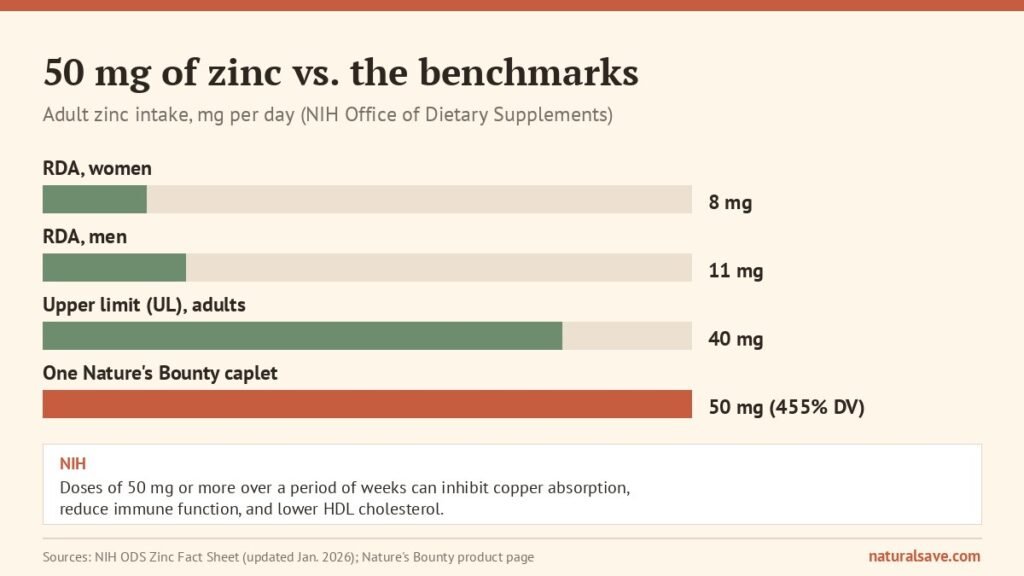
Zinc is an essential mineral, and you do need it. According to the NIH Office of Dietary Supplements, the Recommended Dietary Allowance for adults is 11 mg a day for men and 8 mg for women. The Tolerable Upper Intake Level, the most you can take daily from food and supplements without a known increase in risk for most healthy adults, is 40 mg.
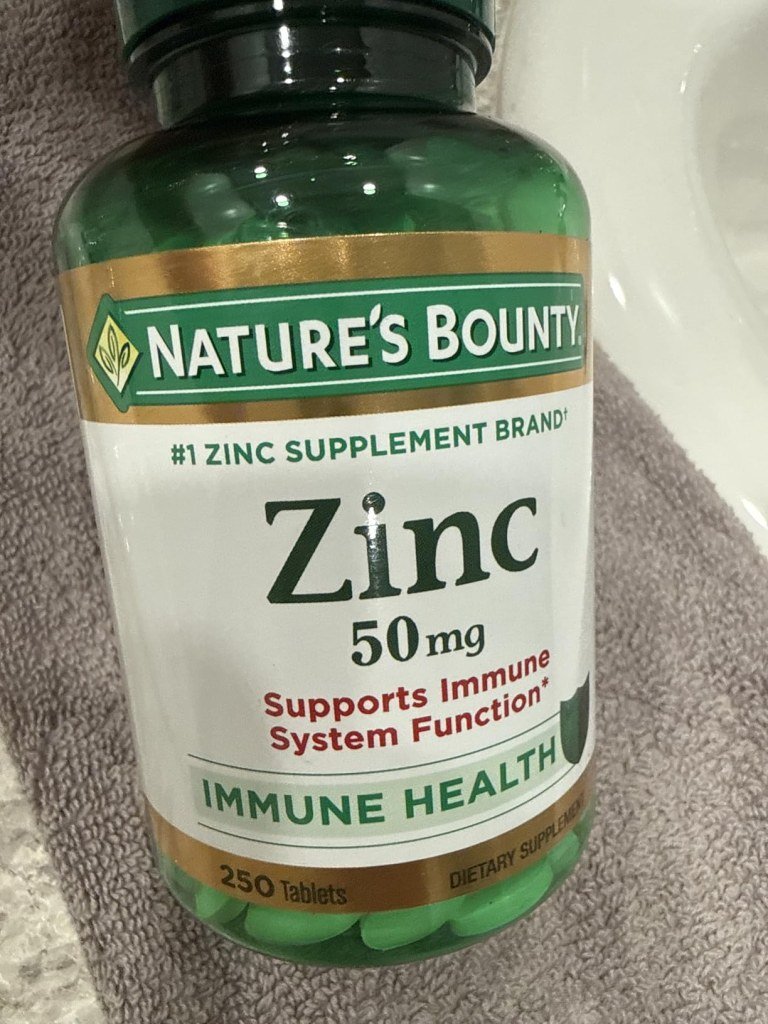
Take Nature’s Bounty’s Zinc 50 mg caplets as an example. The brand’s own product page lists 50 mg of zinc (as zinc gluconate) per caplet, 455% of the Daily Value, with directions to take one a day with a meal. That is roughly four to six times the RDA and above the 40 mg upper limit.
Going above the limit isn’t automatically dangerous. The NIH notes that the limit doesn’t apply to people taking zinc under a doctor’s care. But the NIH also says that doses of 50 mg or more over a period of weeks can inhibit copper absorption, reduce immune function, and lower HDL cholesterol. It adds that you are unlikely to get that much zinc from food alone. The label itself says to ask your healthcare practitioner whether 50 mg is right for you and not to take it with other sources of supplemental zinc.
What the Cold Research Shows
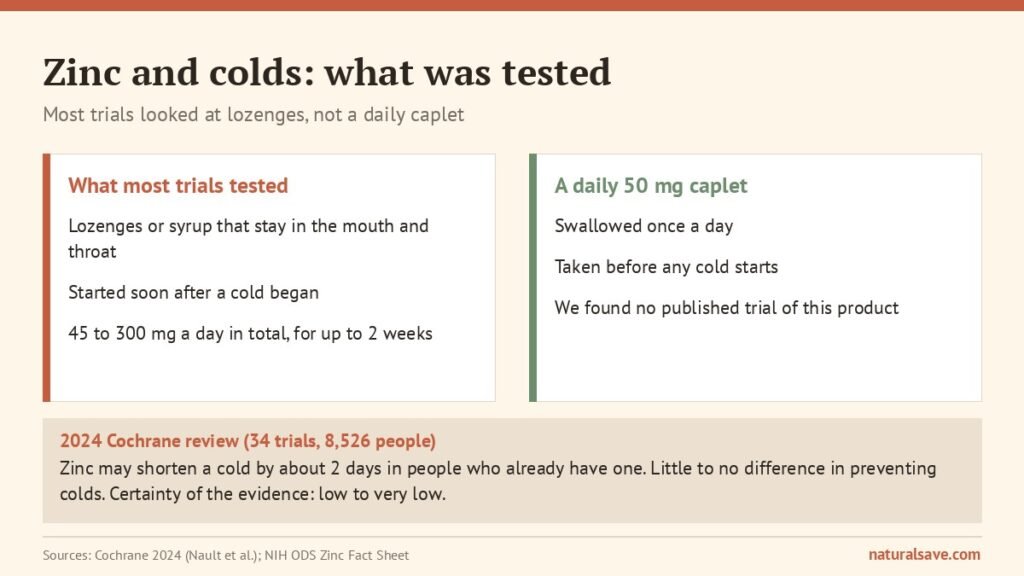
Most people buy zinc for immune support, and cold prevention is the usual reason. The evidence is more limited than the label suggests. The NIH says trial results are inconsistent. Overall, zinc in lozenge or syrup form taken soon after a cold starts seems to shorten how long it lasts, but not how severe it is.
A 2024 Cochrane review of 34 trials with 8,526 people, as summarized by the NIH, concluded that zinc may shorten a cold by about two days in people who already have one, with little to no difference in preventing colds. The authors rated their confidence in these findings as low to very low. A 2021 review of 28 trials also found symptoms ended about two days sooner and no effect on the risk of catching a cold after exposure to a cold virus.
Here’s the catch for a daily caplet. Most trials used lozenges, usually taken every few hours while awake, at total doses of 45 to 300 mg a day for up to two weeks. The NIH describes them as products that stay in the mouth and throat. That is a different way of taking zinc than swallowing one caplet daily. We couldn’t find a published trial of this specific product.
Side Effects and Interactions
The NIH lists nausea, dizziness, headaches, stomach upset, vomiting, and loss of appetite as effects of too much zinc. Amazon’s own review summary for this product mentions that some customers report nausea and stomach pain, and that some find the caplets hard to swallow. That summary is generated from reviews, so it’s anecdotal, but it fits the NIH list. The label suggests taking the caplet with a meal.
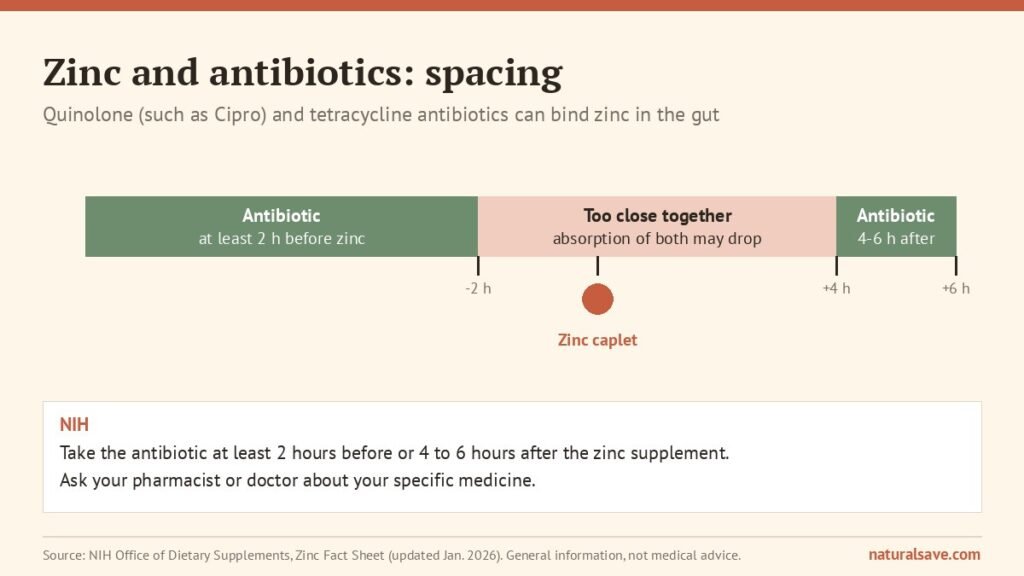
Zinc can also interact with certain drugs. Quinolone antibiotics such as Cipro and tetracycline antibiotics can bind with zinc in the gut, which may reduce absorption of both. The NIH suggests taking the antibiotic at least two hours before or four to six hours after the zinc. Some diuretics can raise zinc loss in urine. If you take any of these regularly, ask your pharmacist or doctor.
A Quick Label Check
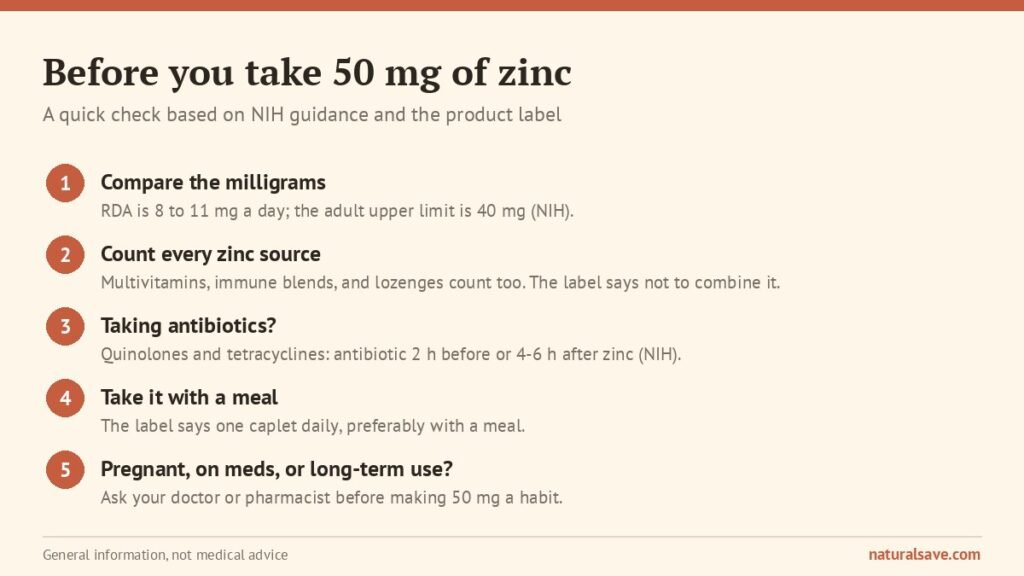
Whatever brand you buy, a few checks help. First, compare the milligrams per serving with the 8 to 11 mg RDA and the 40 mg limit. Second, add up zinc from every source, including multivitamins, “immune” blends, and lozenges, since many of those contain zinc too. Third, if you take antibiotics, plan the timing. Fourth, if you want to take a high dose for more than a short time, talk to your doctor first. For perspective, our posts on 5,000 IU of vitamin D3 and 1,000 mg of vitamin C use the same approach: compare the label number with the official limit before assuming more is better.
The Bottom Line
Zinc is an essential mineral, but “455% Daily Value” is not a reason to take it daily. The research on colds mostly involves short-term lozenge use, and the NIH flags weeks of 50 mg or more as a risk for copper absorption. Nature’s Bounty’s 50 mg caplet is one example of a high-dose product. Read the milligrams, count every source, and check with a doctor or pharmacist before making a high dose a habit.
Sources
- NIH Office of Dietary Supplements, Zinc: Fact Sheet for Health Professionals (updated January 6, 2026)
- Nault D, et al. Zinc for prevention and treatment of the common cold. Cochrane Database of Systematic Reviews, 2024
- Hunter J, et al. Zinc for the prevention or treatment of acute viral respiratory tract infections in adults: a rapid systematic review and meta-analysis of randomised controlled trials. BMJ Open, 2021
- Nature’s Bounty, Zinc 50 mg product page (supplement facts and warning)
- Nature’s Bounty Zinc 50mg Caplets, 250 ct, Amazon product page (viewed October 2026)