
PepsiCo is recalling 122,021 cases of Gatorade, and the FDA’s own record notes that no press release was issued for it. The recall is listed in the agency’s enforcement database, so plenty of people with these bottles at home may not have seen it. Here’s what was recalled, what “Class II” means, and how to check your bottle against the lot codes.
What Exactly Was Recalled
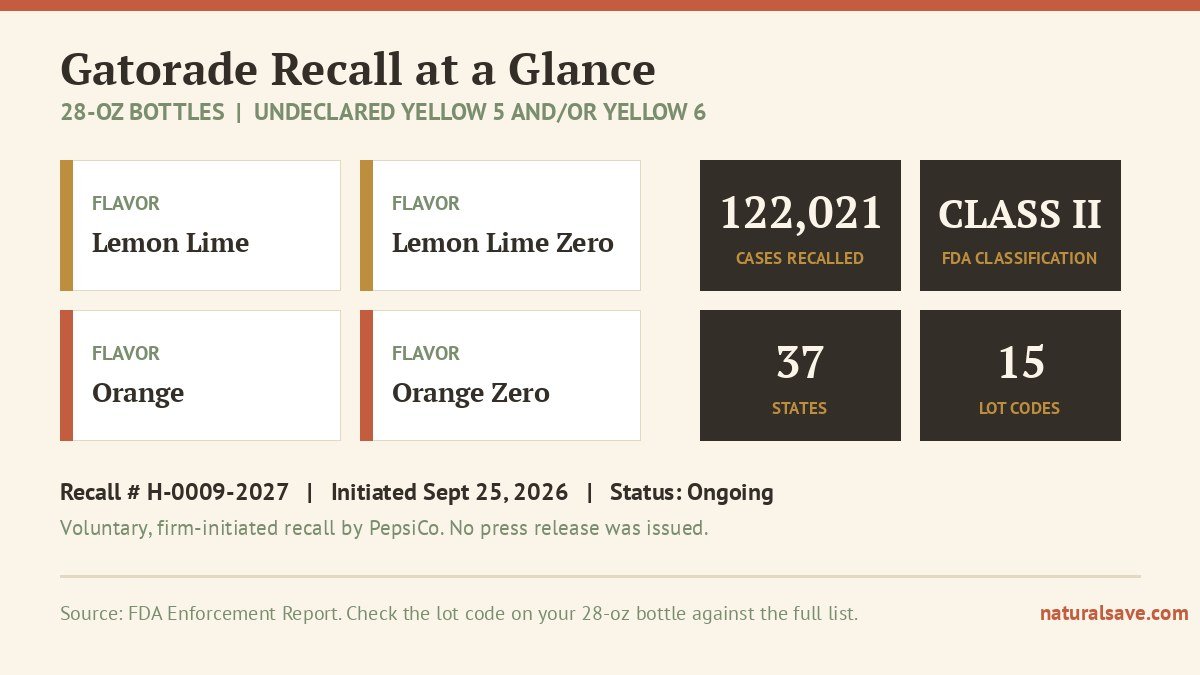
According to the FDA Enforcement Report entry, the recall covers 28-ounce bottles of four flavors: Gatorade Lemon Lime, Lemon Lime Zero, Orange, and Orange Zero. The reason listed is “undeclared Yellow No. 6 and/or Yellow No. 5,” meaning at least one of those two food dyes may be in the drink without appearing on the label. PepsiCo started the recall on September 25, 2026, voluntarily, and the FDA classified it on October 2. Its status is still “ongoing.”
The bottles were distributed to 37 states, including New York and New Jersey. That is a wide footprint, but it doesn’t mean every Gatorade on a shelf is affected. Only 28-ounce bottles of those four flavors with specific lot codes are included. The FDA’s record lists no press release, and as of today the public coverage we could find, including ABC News, doesn’t mention any reported illnesses. That isn’t the same as confirming none occurred, but we found no public reports of reactions tied to this recall.
What “Class II” Actually Means
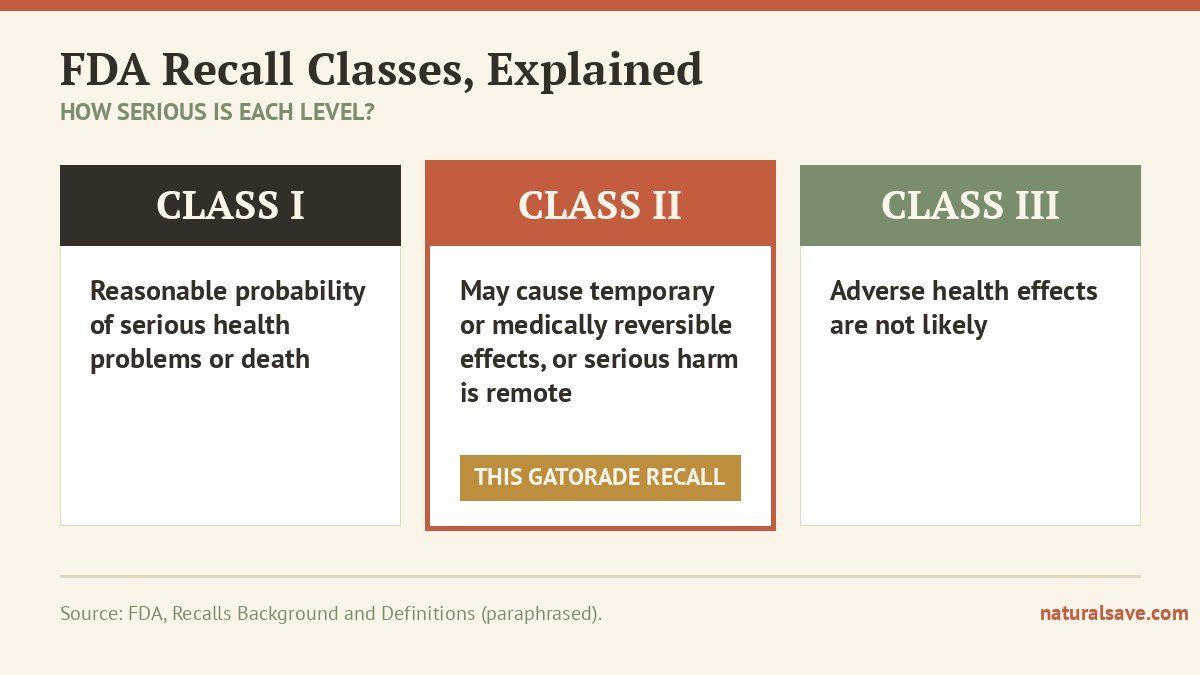
The FDA sorts recalls into three classes, and it defines them in its own recalls glossary. A Class I recall is one where there is a reasonable probability that the product will cause serious health problems or death. A Class II recall is one where use of the product “may cause temporary or medically reversible adverse health consequences,” or where the chance of serious harm is remote. Class III means adverse health effects are not likely.
This recall sits in the middle category. In the FDA’s terms, any harm would be expected to be temporary or reversible, or serious harm is unlikely. It isn’t a statement that the drink is dangerous for everyone. If you’ve seen other recalls in this lane, like the Whole Foods cheese recall over an undeclared egg ingredient, the logic is similar: the problem is what the label leaves out, not necessarily what the product is.
Why an Undeclared Dye Matters
This article is for general informational purposes only. If you think you or your child had a reaction to a food or drink, talk to a healthcare professional.
Yellow No. 5 and Yellow No. 6 aren’t banned or unusual. Both are on the FDA’s list of nine certified color additives approved for food. The issue here is labeling: the FDA requires certified colors to be listed by name, such as “Yellow 6” or “FD&C Yellow No. 6,” so shoppers can see what they’re drinking.
That matters for a small group of people. According to the FDA’s consumer guidance on color additives, an allergic-type reaction to a color additive is possible but rare, and Yellow No. 5 may cause itching and hives in some people. The same page says the FDA’s review found most children have no adverse effects from foods with color additives, though some evidence suggests certain children may be sensitive. An FDA advisory committee concluded in 2011 that a link between certified color additives and children’s behavior hadn’t been established, and the agency says more research is needed. For Yellow No. 6, we couldn’t find a separate reaction warning in the FDA’s consumer pages, so we’re not going to guess at one.
For most people, a dye that isn’t on the label won’t change anything. For someone who knows they react to Yellow 5, though, the label is the only warning they get, which is why a missing dye is treated as a recall issue rather than a footnote.
How to Check Your Bottle
The recall is tied to lot codes, not just flavors. The FDA entry lists the codes, and The Healthy, which reported the full list from the FDA record, shows 15 in total. Each is paired with a best-by date:
- 091026 DL / JUN 07 27
- 091126 DL / JUN 08 27
- 072226 DT / APR 18 27
- 072426 TL / APR 20 27
- 073126 TL / APR 27 27
- 072926 TL / APR 25 27
- 073026 TL / APR 25 27
- 081026 TL / MAY 07 27
- 082126 OA / APR 18 27
- 080126 DL / APR 28 27
- 082026 DL / MAY 17 27
- 083126 DT / JUN 07 27
- 082526 KM / MAY 22 27
- 090426 KM / JUN 01 27
- 072726 TL / APR 23 27
The FDA page only displays the first several codes before cutting off with a “more” link, so the cleanest way to confirm is to open the Enforcement Report entry directly (recall number H-0009-2027) and compare it with your bottle. If the code printed on your 28-ounce bottle isn’t on the list, this recall doesn’t apply to it.
A few things the public record doesn’t tell us. The FDA says “Yellow No. 6 and/or Yellow No. 5” without saying which flavor is missing which dye, and we couldn’t find an explanation from PepsiCo. We also couldn’t find an official refund process or where on the bottle the code is printed. If you have a matching bottle, the safest path is to contact the company or the store where you bought it, and to skip it entirely if someone in your household is sensitive to Yellow 5.
For a different kind of grocery recall, we covered a Walmart frozen berry recall over E. coli last month.
The Bottom Line
The Gatorade recall is a Class II labeling problem: undeclared Yellow 5 and/or Yellow 6 in 28-ounce bottles of four flavors, with 15 lot codes to match against. Nothing in the public record points to illnesses, and the dyes themselves are FDA-approved. The reason it matters is the label. Since no press release went out, the FDA’s Enforcement Report is where the full list lives, and checking your bottle against it doesn’t take long.
Sources
- FDA Enforcement Report: Pepsico Inc, 28 oz Gatorade (Recall H-0009-2027)
- Recalls Background and Definitions: FDA
- Color Additives Questions and Answers for Consumers: FDA
- How Safe Are Color Additives?: FDA
- Sports Drink Recall: FDA Flags Issue With Four Popular Flavors: The Healthy
- Over 122K cases of Gatorade recalled due to undeclared food dyes, FDA says: ABC News