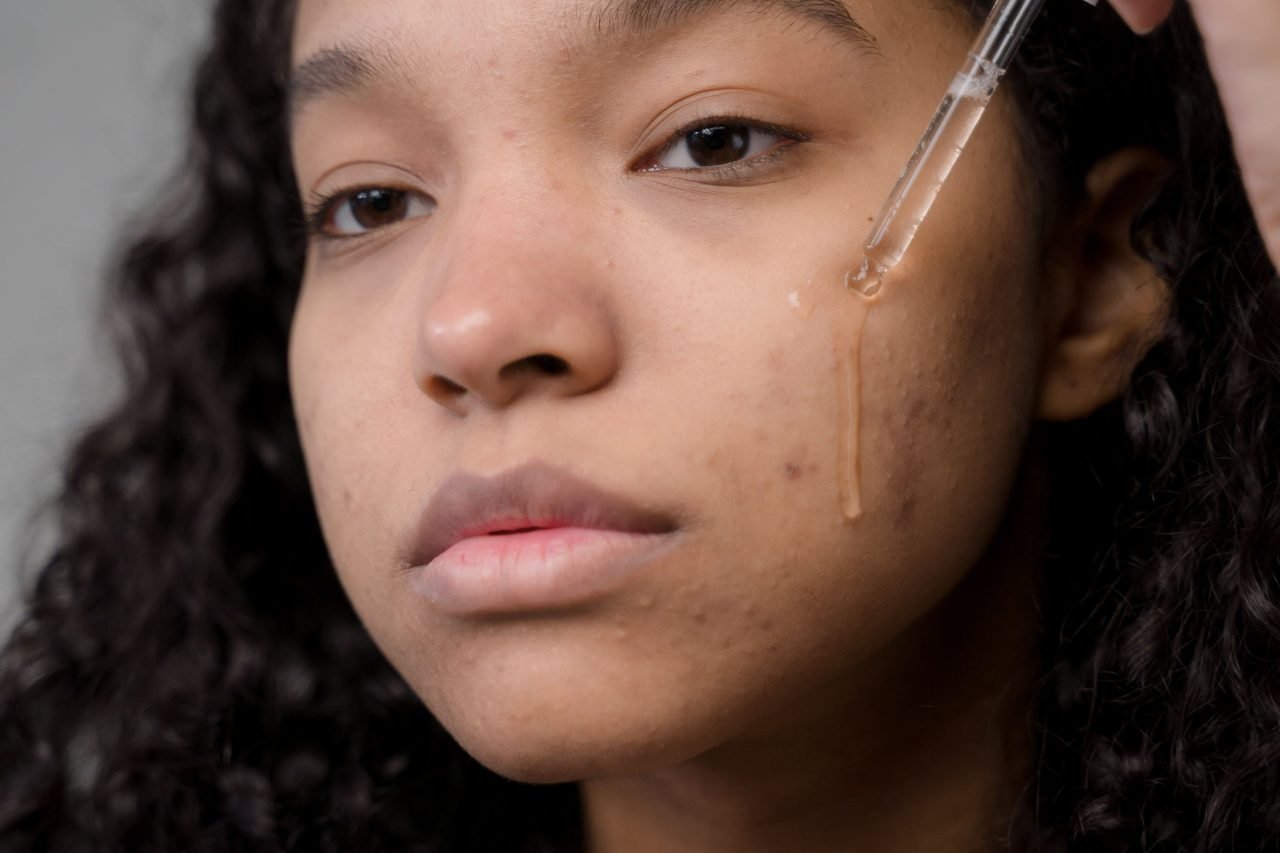
COSRX’s snail mucin essence is 96% snail secretion filtrate. The clinical studies that actually show skin benefits? They tested creams with 5 to 10 percent — a completely different number, measuring a completely different thing.
Snail mucin is having another moment on TikTok, and if you’ve scrolled past a glass-skin video lately, you’ve probably seen that “96%” printed right on the bottle. It sounds like a guarantee. It isn’t quite one. By the end of this, you’ll know what snail secretion filtrate actually is, what the research behind it really tested, why that “96%” doesn’t line up with those studies the way you’d expect, and who might want to think twice before trying it.
This post contains affiliate links. If you make a purchase through them, we may earn a small commission — at no extra cost to you.
What “Snail Secretion Filtrate” Actually Is
This article is for informational purposes only and is not medical advice. Talk to a dermatologist before adding a new active ingredient to your routine, especially if you have sensitive skin or known allergies.
Snail secretion filtrate (SSF) is the mucus-like substance snails produce, and it’s a genuinely complex mixture — proteins, enzymes, peptides, and trace minerals that, according to a review of the research, are associated with improvements in skin hydration, elasticity, and smoothness. Most of the research centers on extracts from one species in particular, the Mediterranean garden snail (Cryptomphalus aspersa), which yields two related but distinct ingredients: SSF itself, and a snail egg extract that’s studied separately for its own skin-related effects.
The proposed mechanism isn’t mysterious — it’s the same basic idea behind a lot of hydrating skincare. The proteins and humectant compounds in SSF help the skin hold onto water and support the outer barrier that keeps moisture from escaping. What’s less settled is exactly how much of that benefit comes from the snail-derived proteins themselves versus the other humectants — sodium hyaluronate, panthenol, and similar ingredients — that almost every SSF product is formulated with alongside it.
What the Clinical Research Actually Tested
Here’s where it gets more specific. A randomized, controlled trial published in the Journal of Clinical and Aesthetic Dermatology followed 50 women aged 45 to 65 with visible signs of photoaging, split into a group using SSF-based active products (30 women) and a group using an inactive vehicle (20 women), over a three-month regimen. The active group saw significant reductions in transepidermal water loss (a marker of how much moisture is escaping through the skin) along with measurable improvements in roughness, firmness, and elasticity compared to the vehicle group. That’s a real, well-designed study — though it’s worth knowing the products tested were a specific formulation made by Cantabria Labs, the study’s funder, not the COSRX essence on shelves today.
Separately, a review of snail-based skincare research describes cream formulations containing 5% and 10% SSF producing a significant drop in water loss within 24 hours, with skin hydration improving at both concentrations. There’s also a mouse study on surgical wounds where SSF sped up wound closure and improved markers like collagen deposition — promising, but it’s an animal model, not a measurement of what happens on human skin.
So Why Doesn’t “96%” Match the Studies?
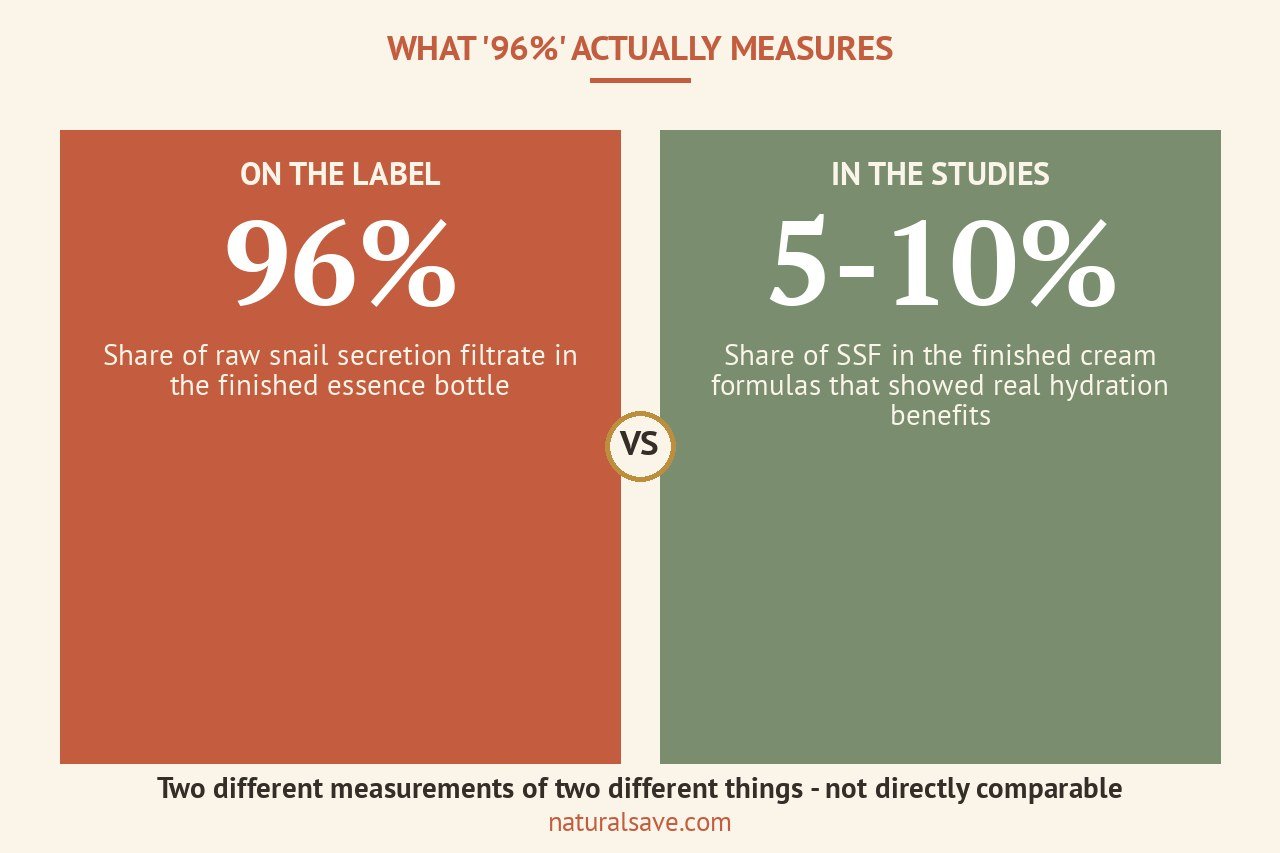
Notice the gap: the studies that actually measured skin benefits used creams with 5% to 10% SSF. The COSRX essence is labeled 96% snail secretion filtrate. Those two numbers aren’t measuring the same thing, and that’s the part the marketing doesn’t spell out.
“96%” describes how much of the finished essence, by weight, is the raw snail secretion filtrate solution itself — essentially, how little else (besides a handful of other ingredients) got added to dilute it. The “5%” and “10%” in the clinical studies describe how much SSF is present in a finished cream that also contains a base of other emulsifiers and moisturizers. One is a statement about a single ingredient’s share of a mostly-single-ingredient product; the other is about a smaller ingredient’s share of a multi-ingredient formula. There’s no standardized industry method for how much active snail secretion actually ends up in a bottle labeled this way, so a bigger printed percentage doesn’t tell you the product works better — it mostly tells you less got diluted into it.
None of that means the ingredient is fake or useless. It means the “96%” is a manufacturing detail, not a clinical claim, and it can’t be compared directly to a number from a study testing something formulated completely differently.
Who Should Think Twice Before Using It
There’s a specific allergy angle worth knowing that doesn’t get much attention: dermatology sources note a documented immunological cross-reactivity between dust mites and snails, meaning your immune system can sometimes mistake proteins in snail-derived skincare for dust mite proteins. If you have a confirmed dust mite allergy — especially one connected to asthma — that’s a real reason to patch-test before applying an SSF essence to your whole face, not just a general caution.
It’s also worth being upfront that snail mucin isn’t vegan, since it comes from a live animal, and the ethics of how it’s collected are genuinely debated — some brands describe letting snails roam freely and collecting the trail they leave behind, while critics point out that common extraction methods involve enough handling or stimulation to visibly stress the snails. If either of those is a dealbreaker for you, that’s worth knowing going in rather than after you’ve bought the bottle.
If you’re comfortable with both of those points and still want to try the ingredient, something like the COSRX Advanced Snail 96 Mucin Power Essence is the version most people mean when they talk about it — just go in knowing the number on the label is about concentration, not proof of results.

The Bottom Line
The “96%” on a snail mucin essence isn’t a lie, but it isn’t a performance score either — it’s telling you how concentrated the raw filtrate is in the bottle, not how it compares to the 5-10% formulations that actually showed hydration and elasticity benefits in clinical research. The ingredient itself has real, if still limited, evidence behind it. The number just doesn’t mean what the marketing implies it means.
If you want to try it anyway — and there’s reasonable evidence to justify curiosity — a patch test first and realistic expectations matter more than the percentage on the front of the bottle, whether that’s the COSRX essence or any other snail mucin product on the shelf.
Sources
- Singh, et al. “Snail extract for skin: A review of uses, projections, and limitations.” J Cosmet Dermatol. 2024.
- Lim VZ, Yong AA, Tan WPM, Zhao X, Vitale M, Goh CL. “Efficacy and Safety of a New Cosmeceutical Regimen Based on the Combination of Snail Secretion Filtrate and Snail Egg Extract to Improve Signs of Skin Aging.” J Clin Aesthet Dermatol. 2020;13(3):31-36.
- “The Protective Effect of Snail Secretion Filtrate in an Experimental Model of Excisional Wounds in Mice.” Vet Sci. 2021;8(8):167.
- Renée Rouleau Skin Care. “From Ethics to Allergies, Here’s Why Snail Mucin Might Not Be for You.”
- PETA. “What Is Snail Mucin and How Is It Collected for Skincare Products?”