
A warning label going bigger on a bottle doesn’t always mean the science behind it is solid. Case in point: the fish oil warning that tells you to check with your doctor if you’re allergic to iodine or taking blood thinners. One half of that warning is genuinely worth paying attention to. The other half is, medically speaking, not quite right. Here’s how to tell which is which.
This post contains affiliate links. If you make a purchase through them, we may earn a small commission — at no extra cost to you.
What the Warning Label Actually Says
Nordic Naturals Ultimate Omega is a fairly typical high-potency fish oil: two soft gels a day deliver 1,280 mg of omega-3s (EPA and DHA) in triglyceride form, sourced from anchovies, sardines, mackerel, and herring. Tucked into the safety information is this line: “Consult with your physician before using this product if you are allergic to iodine, or use blood thinners.”
That’s actually two separate warnings jammed into one sentence, and they don’t hold up the same way under scrutiny. One is a real, dose-related consideration. The other rests on a common misunderstanding about what causes seafood allergies in the first place.
The Blood Thinner Part: What’s Actually Backed by Research
If you’ve read about omega-3s mainly in the context of joint stiffness or other benefits, the blood-thinning angle might be new territory. It comes down to the same fatty acids working on a different system in the body.
According to the National Institutes of Health’s Office of Dietary Supplements, fish oil can have antiplatelet effects at high doses — meaning it can make blood platelets less likely to clump together — though it’s less potent than aspirin at doing this. Taken alongside warfarin, fish oil might prolong clotting times, showing up as an elevated INR (the standard blood test used to monitor anticoagulant therapy).
But here’s the part that often gets left out: most research indicates that doses of 3 to 6 grams of fish oil per day don’t significantly affect the anticoagulant status of people taking warfarin. A 2014 review went further, concluding that omega-3s don’t raise the risk of clinically significant bleeding. Even the FDA-approved package inserts for prescription omega-3 medications state that their studies didn’t produce clinically significant bleeding episodes — though those same inserts still recommend periodic INR monitoring for anyone also taking anticoagulants.
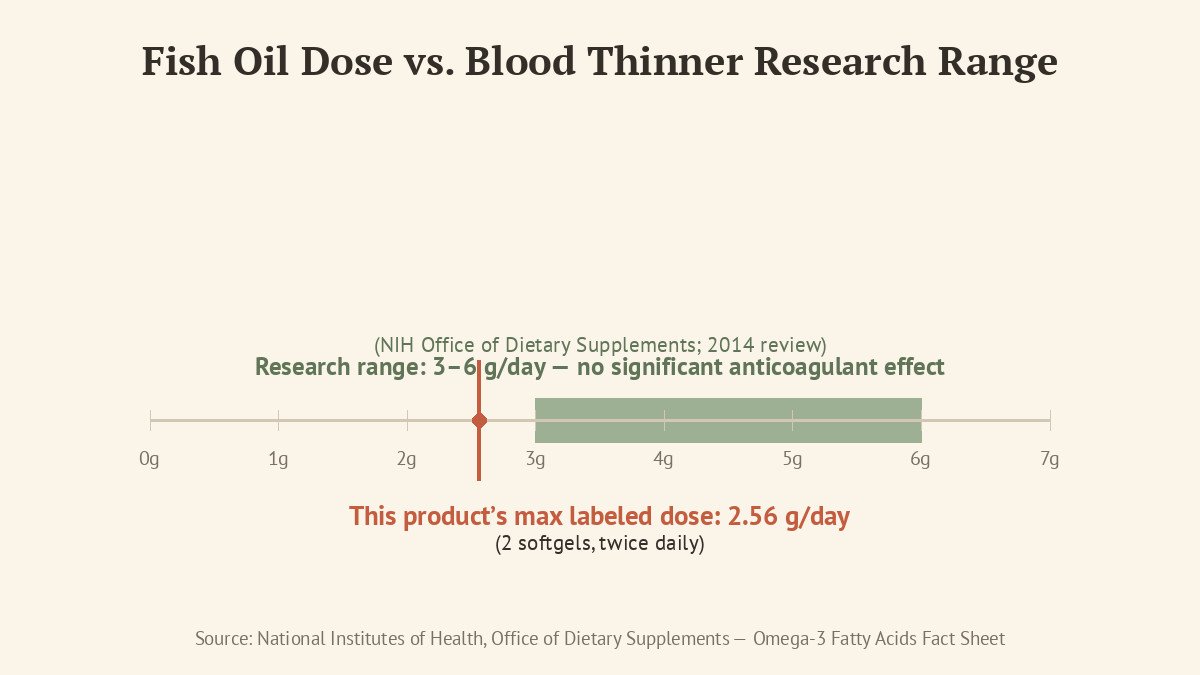
Where does a supplement like this land? At the labeled “for ultimate support” dose — two soft gels, twice daily — you’d be taking about 2,560 mg (2.56 g) of omega-3s a day. That’s below the 3-to-6-gram range where research hasn’t found a significant effect, though not by a huge margin. In other words: this isn’t a supplement dose that’s been shown to cause problems, but it’s also not so far from the range that gets studied for this exact interaction. If you’re on warfarin or any other blood-thinning medication, that’s a “talk to your doctor first” situation regardless of the exact number on the label — not because the research says you’ll definitely have a problem, but because INR monitoring is cheap insurance against an interaction that’s plausible even if it’s usually mild.
The Iodine Part: Why That Wording Is Actually Wrong
The second half of the warning is a different story. According to a review published in the American Journal of Health-System Pharmacy, IgE-mediated seafood allergy has never actually been attributed to iodine. The real allergens are proteins — tropomyosin in shellfish, and parvalbumin in fish. Iodine itself is an element, and as the review puts it, an essential nutrient “cannot be an allergen.” People who react to iodine-containing foods or medications are reacting to something else in them, not the iodine.
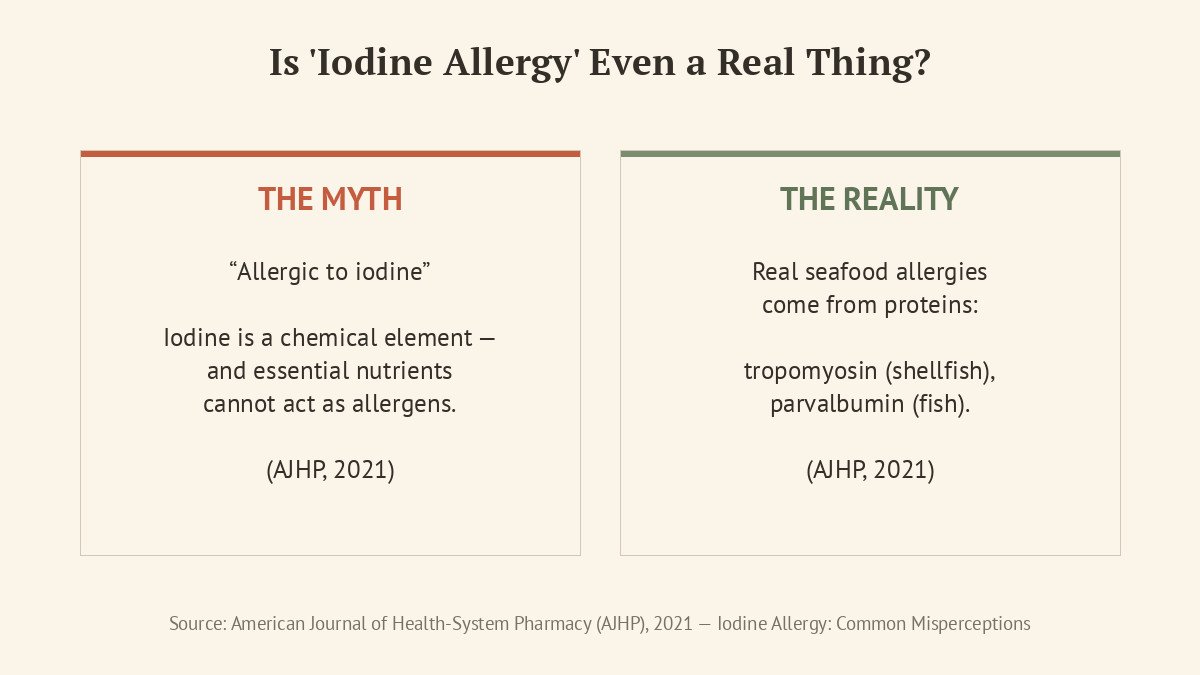
This mix-up shows up a lot in medicine, not just on supplement labels — it’s the same misconception behind the old (and now outdated) advice that people with shellfish allergies should avoid iodine-based contrast dye before a CT scan. The allergy risk in both cases traces back to proteins, not the iodine atom.
So does that mean a fish allergy is nothing to worry about here? Not quite. Mayo Clinic notes that it’s still not entirely clear whether fish oil is safe for people with seafood allergies — the concern just isn’t about iodine. It’s about trace amounts of the same fish proteins (like parvalbumin) that trigger the allergy in the first place, which can theoretically survive the purification process. The label’s reasoning is off, but “be cautious if you have a seafood allergy” is still reasonable advice — for the right reason.
So What Should You Actually Do?
This article is for informational purposes only and isn’t a substitute for medical advice. Talk to your doctor about your specific situation before starting or stopping any supplement.
If you’re on a blood thinner, the takeaway isn’t “this dose is fine” or “this dose is dangerous” — it’s that this is exactly the kind of thing worth a quick conversation with whoever manages your medication, especially if you’re already getting regular INR checks anyway. If you have a seafood allergy, the useful question isn’t “am I allergic to iodine” (you can’t be) but “has my doctor cleared fish oil for me specifically,” since the real concern is protein residue, not the mineral the label named.
For everyone else, it’s a useful reminder that supplement warning labels are written broadly to cover legal bases, not to explain the actual mechanism. A product like Nordic Naturals Ultimate Omega uses the same boilerplate language most fish oil brands do — the label isn’t wrong to flag caution, it’s just imprecise about why. Reading past the warning to the actual research behind it is usually worth the extra five minutes.