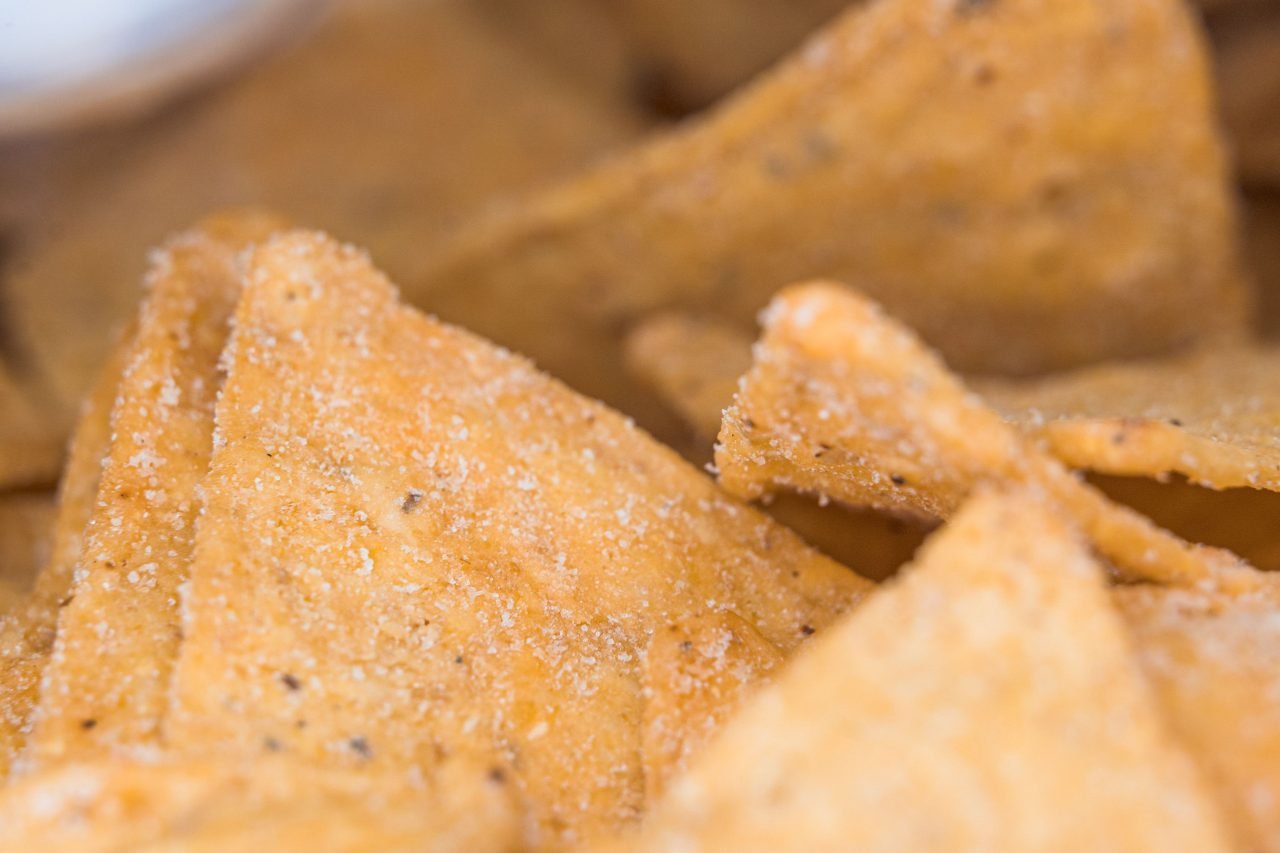
The scariest-looking name on a bag of Doritos — MSG — is actually the one with the least evidence behind it. The real story is somewhere else on the label.
If you’ve ever flipped a bag of Nacho Cheese Doritos over and skimmed the ingredient list, you know the feeling: a wall of names you can’t quite place, next to a nutrition panel that looks fairly ordinary. This is a straightforward look at what’s actually in one serving, which of those unfamiliar names are worth a second thought, and which ones get more blame than they deserve. By the end, you’ll know exactly which two ingredients people actually argue about, and why the research on them points in different directions.
This post contains affiliate links. If you make a purchase through them, we may earn a small commission — at no extra cost to you.
What’s Actually in a Bag of Doritos (Reading the Label)
This article is for informational purposes only and is not medical advice. If you or your child has a specific sensitivity to food additives, talk to a doctor or registered dietitian about your individual situation.
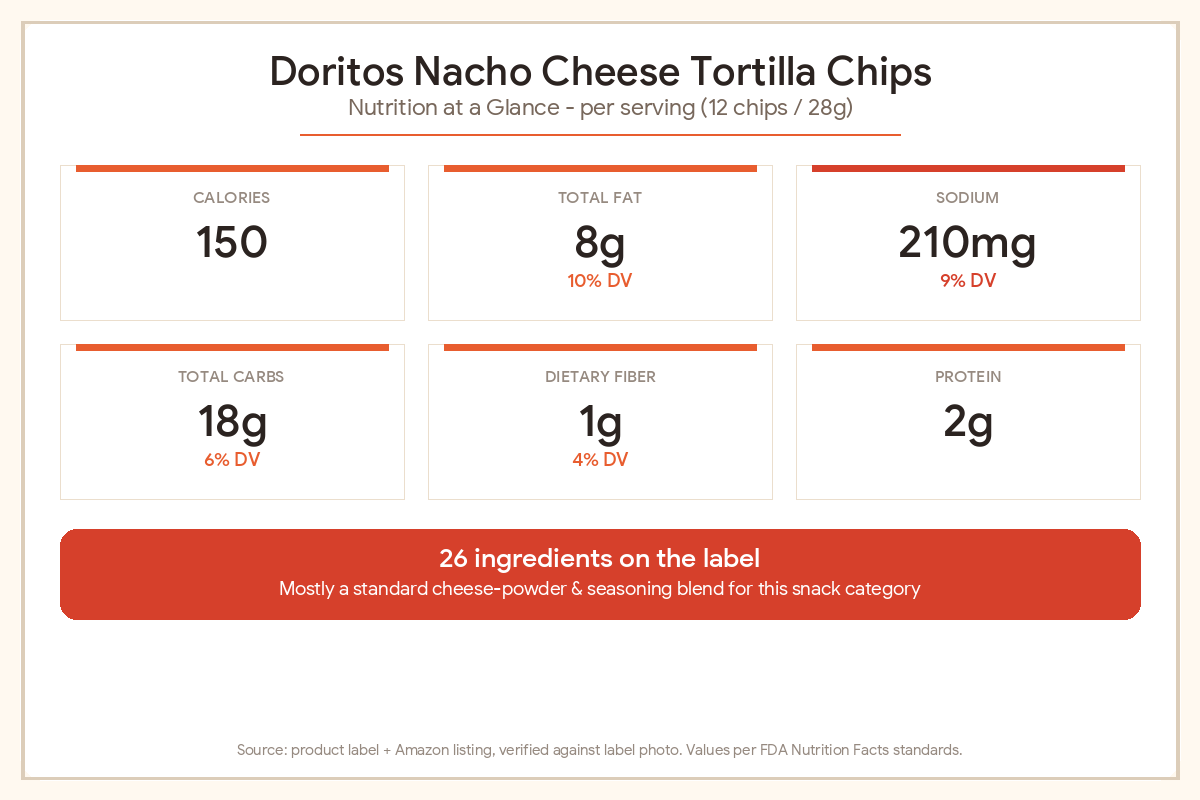
One serving of Doritos Nacho Cheese Tortilla Chips — about 12 chips (28g) — has 150 calories, 8g of total fat, 18g of carbohydrates, 1g of fiber, and 2g of protein. Sodium sits at 210mg, which is 9% of the daily limit most adults are told to stay under, according to the CDC. On its own, that’s a fairly moderate number, nowhere near the kind of sodium spike you’d see in some instant noodle products.
The ingredient list is longer: corn, vegetable oil, maltodextrin, salt, cheddar cheese, whey, monosodium glutamate, buttermilk, romano cheese, whey protein concentrate, onion powder, corn flour, natural and artificial flavor, dextrose, tomato powder, lactose, spices, artificial color (Yellow 6, Yellow 5, and Red 40), lactic acid, citric acid, sugar, garlic powder, skim milk, red and green bell pepper powder, disodium inosinate, and disodium guanylate — 26 items in total. It reads like a lot, but most of it is a fairly standard cheese-powder-and-seasoning blend for a cheese-flavored snack. Two ingredients tend to get singled out as the “concerning” ones: MSG and the artificial colors. Their actual safety records look very different from each other.
MSG and Artificial Colors: What the Research Actually Says
Monosodium glutamate has one of the more surprising track records on this label. The FDA classifies MSG as “generally recognized as safe,” and notes that in controlled studies, people who self-identify as MSG-sensitive haven’t been able to consistently react to it over a placebo. A 1990s review by the Federation of American Societies for Experimental Biology, commissioned by the FDA, reached the same conclusion — with the caveat that some sensitive individuals may notice short-term symptoms like headache or flushing if they consume 3 grams or more of MSG without food. A typical serving of a snack with added MSG contains well under half a gram, far below that threshold.
The artificial colors are a murkier story. A 2021 review by California’s Office of Environmental Health Hazard Assessment analyzed 27 studies and concluded that synthetic food dyes, including Yellow 5, Yellow 6, and Red 40, can affect neurobehavior in some children, and that current federal safety margins may not fully account for that. The FDA’s own position is more cautious: in 2019, its Food Advisory Committee stated that a causal link between synthetic color additives and behavioral effects in children had not been established, while still recommending further research. In other words, two credible bodies looked at overlapping evidence and landed in different places — that’s a real disagreement in the science, not a settled fact in either direction.
The Real Issue: Ultra-Processed Food and Repeated Snacking
Individual ingredients aside, Doritos falls into a broader category — ultra-processed food — that has its own body of research. A 2024 umbrella review in The BMJ reanalyzed 45 pooled studies covering nearly 10 million people and found that higher ultra-processed food intake was associated with a higher risk across 32 different health outcomes, including a 21% higher risk of all-cause mortality, a 55% higher risk of obesity, and a higher risk of type 2 diabetes that rose with each additional increment of intake (dose-response). It’s worth being precise about what this means: these are observational associations, not proof that any single snack causes these outcomes, and the review’s own authors note that people who eat more ultra-processed food often differ from those who don’t in other ways too.
Frequency seems to matter more than any single ingredient. A 2024 analysis of over 8,000 Korean adults found that people who got the largest share of their daily calories in the evening had meaningfully higher odds of metabolic syndrome and obesity than people who ate more of their calories earlier in the day, even after adjusting for total calorie intake. That study wasn’t about chips specifically — it looked at overall evening eating patterns — but it lines up with the more general idea that how a snack fits into your day matters more than whether you eat it in the morning or at night.
The Practical Version: How Many Chips Is Actually One Serving?
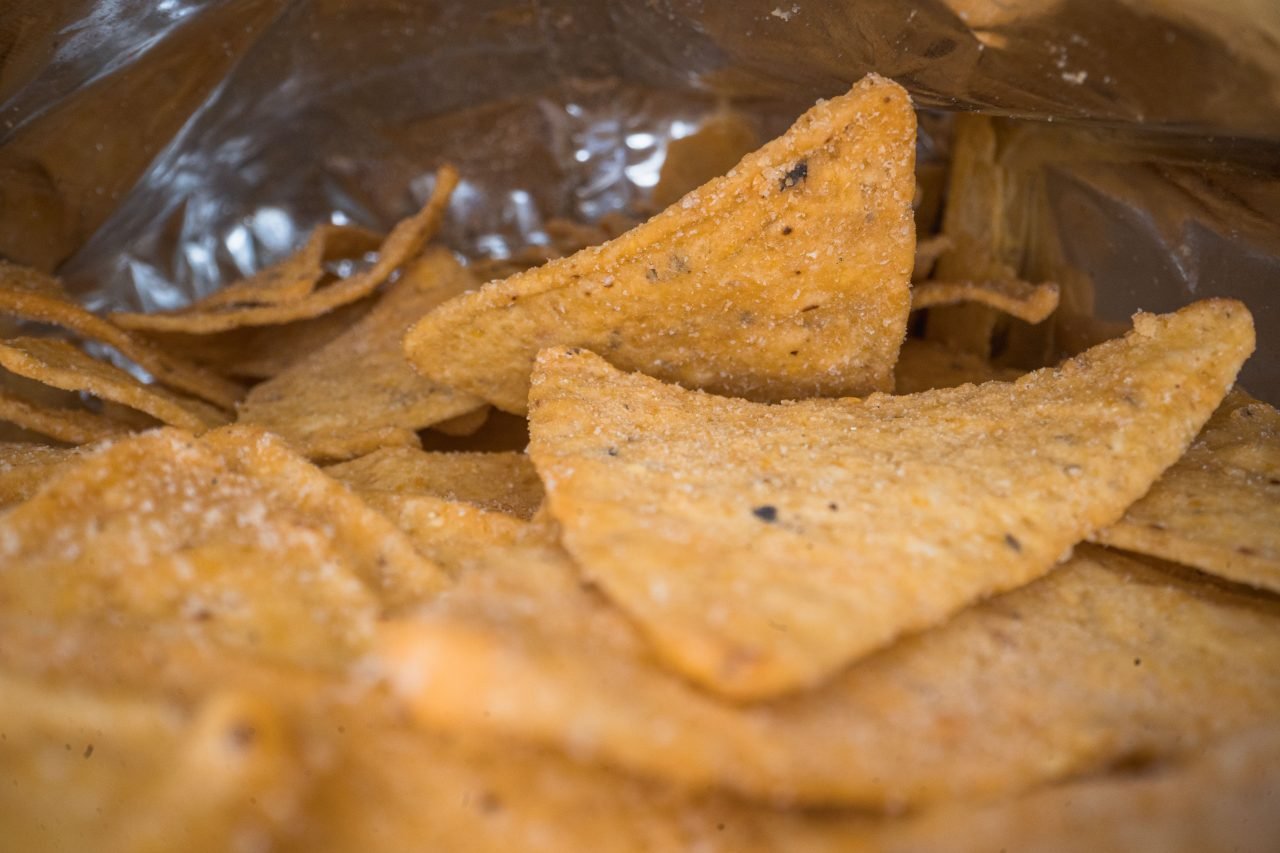
Here’s where the numbers above get more useful: a party-size bag of Doritos Nacho Cheese contains about 15 servings, and one serving is only 12 chips. In practice, that’s a small handful — smaller than most people picture when they think of “a serving” of chips straight from a shared bag. If you’re eating while watching a show or at a gathering, it’s easy to go through two or three servings without noticing, which turns that fairly moderate 210mg of sodium into 420-630mg, and turns an occasional snack into something closer to a regular habit.
None of this means portioning out exactly 12 chips every time. It just means the label’s serving size is a useful reference point, especially if Doritos is something you reach for often rather than occasionally.
The Bottom Line
MSG wasn’t the villain here — it’s one of the more thoroughly studied and reassured-upon ingredients on the label. The artificial colors are a genuinely open question, with two health agencies reading similar evidence differently. And the bigger, better-supported concern isn’t any single ingredient at all: it’s how often ultra-processed snacks like this one show up in a day, and how large a “serving” ends up being in practice.
None of that means cutting Doritos out entirely. It means the honest answer to “is this bad for you” depends less on the ingredient list and more on frequency and portion size — and now you know which parts of that label actually deserve a second look.
Sources
- CDC. “Nutrition Facts Label and Your Health.” Healthy Weight and Growth. Reviewed April 2026.
- FDA. “Questions and Answers on Monosodium glutamate (MSG).”
- California Office of Environmental Health Hazard Assessment. “Potential Neurobehavioral Effects of Synthetic Food Dyes in Children.” April 2021.
- FDA Science Board. “Color Additives and Behavioral Effects in Children.” October 7, 2019.
- Lane MM, et al. “Ultra-processed food exposure and adverse health outcomes: umbrella review of epidemiological meta-analyses.” BMJ. 2024;384:e077310.
- Kim S, Cho J. “Higher energy consumption in the evening is associated with increased odds of obesity and metabolic syndrome: findings from the 2016-2018 KNHANES.” Epidemiol Health. 2024.