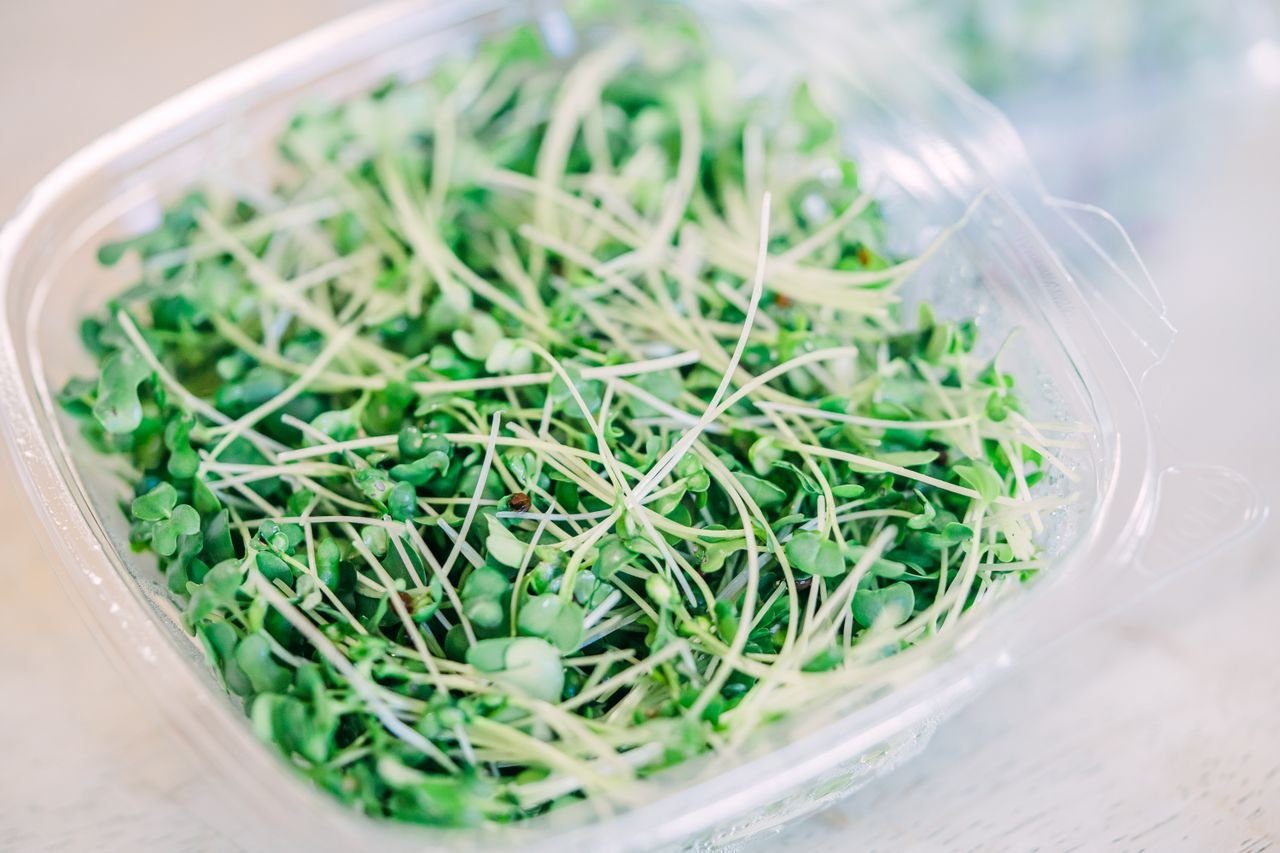
This summer, two separate sprout outbreaks were linked to 87 illnesses across the country, and then a recall of alfalfa sprouting seeds reached more than 40 states. Rinsing your sprouts feels like the responsible thing to do, but it isn’t what the FDA says makes them safe.
Here is what happened, why sprouts behave differently from other produce, who should skip them raw, and what to check at home this week.
This article is for informational purposes only and is not medical advice. If you think you have food poisoning, contact a health care provider.
Three Sprout Alerts, Not One
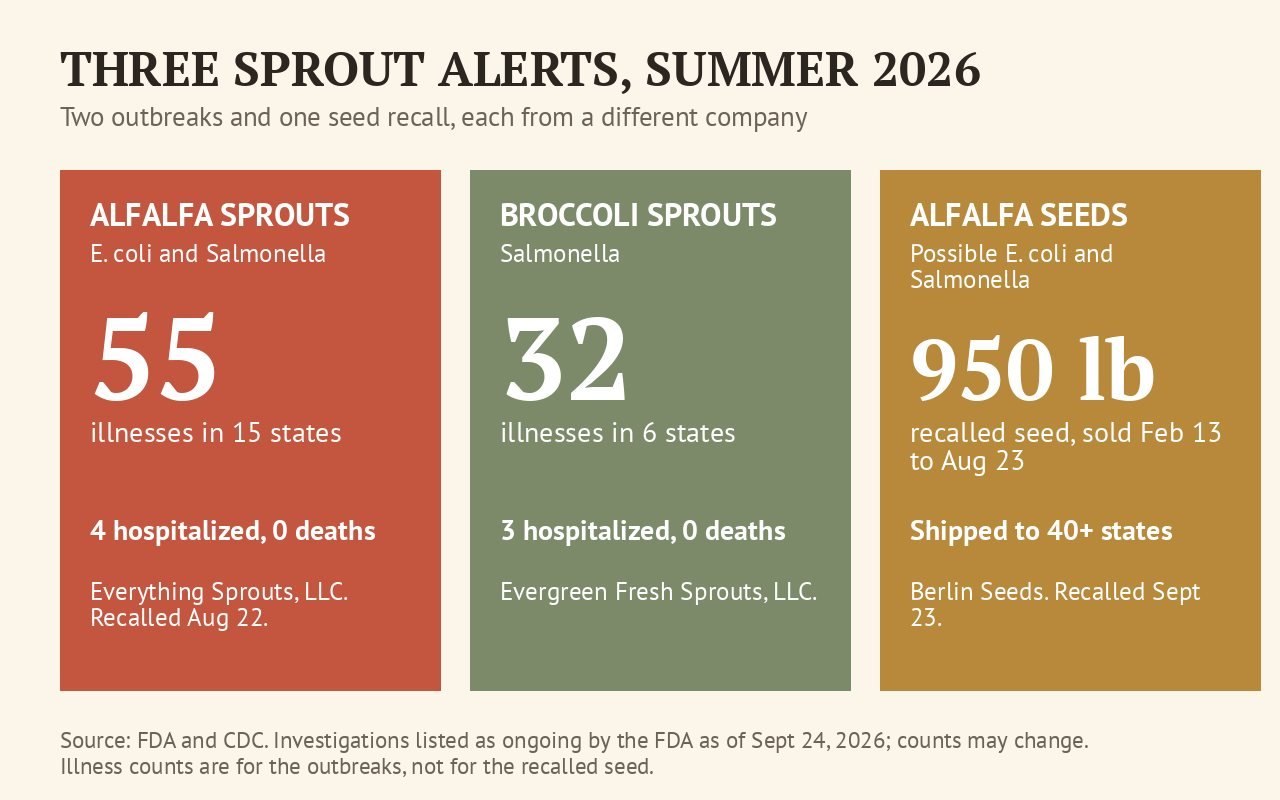
These are three separate events. Two are outbreaks, and one is a recall of the seeds used to grow sprouts. The FDA lists both investigations as ongoing as of September 24, 2026, so the numbers may change.
1. Alfalfa sprouts: E. coli and Salmonella. The FDA and CDC linked 55 illnesses in 15 states, including New York, to alfalfa sprouts from Everything Sprouts, LLC. Four people were hospitalized, and no deaths were reported. Illnesses started between May 31 and August 8. The company recalled Calco and Everything Sprouts brand alfalfa sprouts on August 22, and later several sprout mixes. The CDC says the August 28 recall of its Robust Radish Sprout Mix was over cross-contamination risk.
2. Broccoli sprouts: Salmonella. A separate FDA investigation found 32 illnesses in Idaho, Minnesota, Montana, Oregon, Utah, and Washington, tied to broccoli sprouts from Evergreen Fresh Sprouts, LLC. Three people were hospitalized, and no deaths were reported. Illnesses started between July 7 and September 3.
3. Alfalfa sprouting seeds. On September 23, Berlin Seeds recalled 950 pounds of alfalfa seed. The company said its supplier traced the seed to a sprout grower whose sprouts were part of the FDA’s E. coli outbreak investigation, and that a water sample from one of the supplier’s alfalfa seed lots tested positive for E. coli.
Different companies, different bacteria, same type of food. That is not a coincidence.
Why Sprouts Are Different From Other Produce
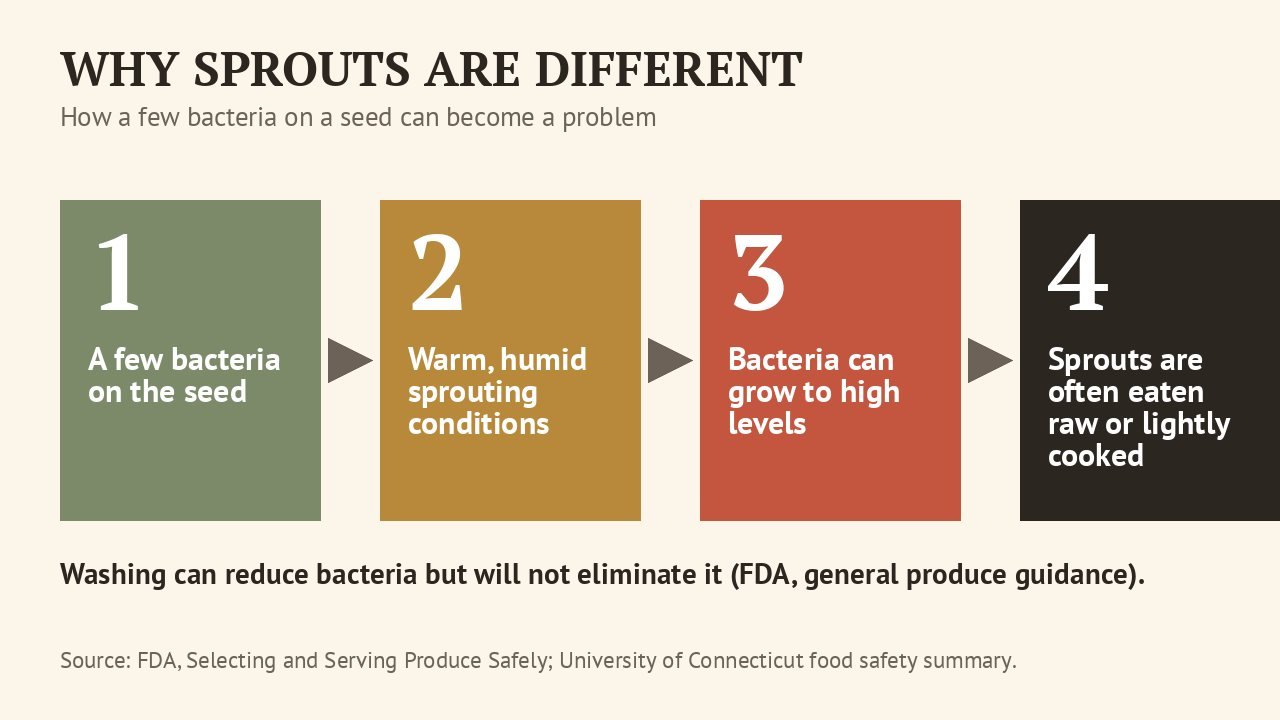
Sprouts grow from seeds and beans in warm, humid conditions, which is also ideal for bacteria. The FDA’s produce safety guidance explains the problem: if just a few harmful bacteria are present in or on the seed, they can grow to high levels during sprouting, even if you are growing your own sprouts under sanitary conditions at home. The bacteria involved include Salmonella, Listeria, and E. coli.
That is why the seed matters so much. In the Berlin Seeds recall, the trace led back to the seed.
Sprouts are also usually eaten raw or lightly cooked. A University of Connecticut food safety summary notes that, historically, there has been no step that eliminates pathogens before they are eaten, and says raw or lightly cooked sprouts have caused about 2,308 illnesses across 38 U.S. outbreaks since 1990.
So can you just wash them or buy organic?
Does Washing or Buying Organic Help?
Washing can reduce bacteria, but the FDA’s general produce guidance says it will not eliminate them. That is the FDA’s broad guidance for produce rather than a sprout-specific statement, and for sprouts the concern is that bacteria can be in or on the seed from the start.
Organic does not solve it either. The UConn summary notes that bacteria contaminate conventional and organic seeds equally.
What does change the risk is heat.
Who Should Skip Raw Sprouts, and What Cooking Does
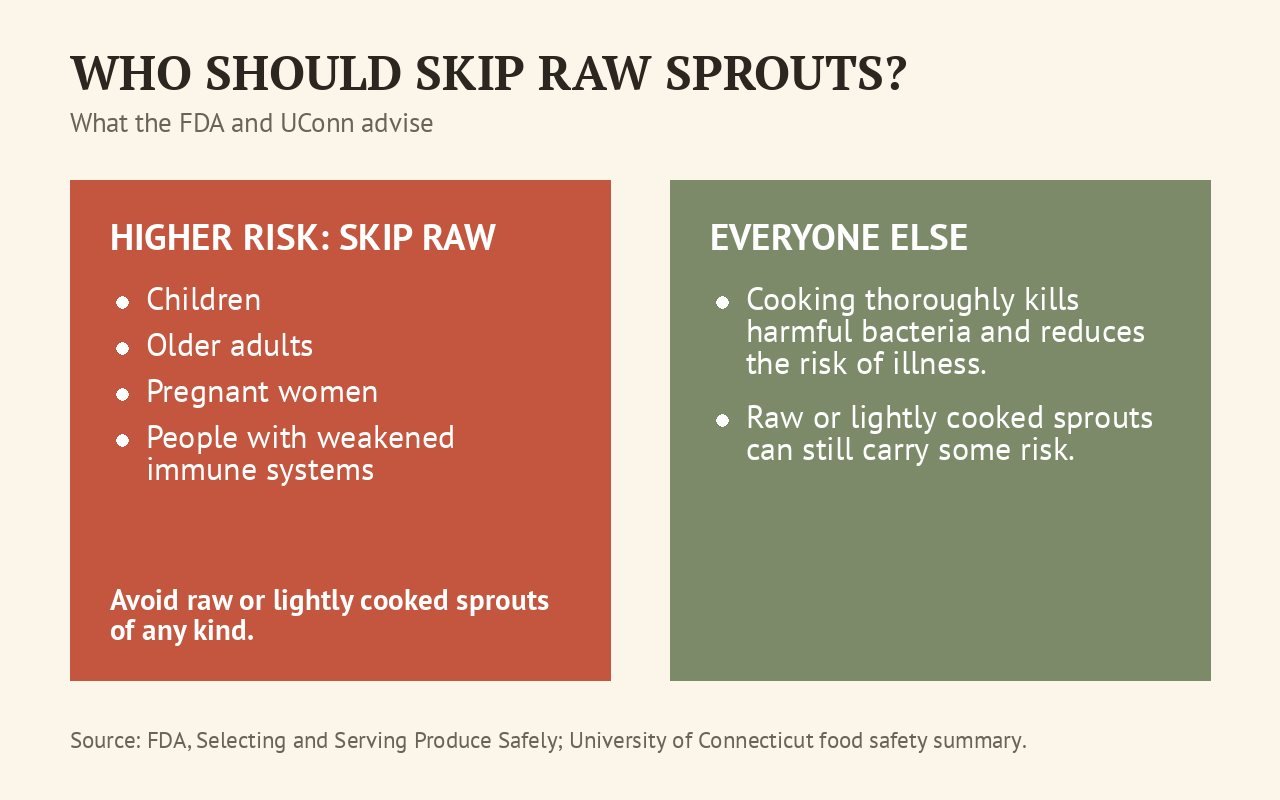
The FDA and UConn both say that children, older adults, pregnant women, and people with weakened immune systems should avoid raw or lightly cooked sprouts of any kind. In the alfalfa outbreak, the CDC lists children under 5, adults 65 and older, and people with weakened immune systems as being at higher risk of severe illness.
For everyone else, the FDA says cooking produce thoroughly kills harmful bacteria and reduces the risk of illness. Reduces is the key word: cooking lowers the risk rather than removing it. We could not find a specific temperature or time in the sources we reviewed, so we are not going to make one up. If you have a health condition or take medicine that affects your immune system, ask your doctor or pharmacist what is safe for you.
If you grow your own, though, the seed itself may be the problem.
Growing Your Own? Check the Seeds
The Berlin Seeds recall is the one that affects home sprouters directly. The seeds were sold from February 13 to August 23, 2026, through the company’s Ohio store and its website, and shipped to more than 40 states. The 5-pound and 50-pound bags carry lot code SAL2-24JB, and the smaller sizes do not have a lot code, so the brand and purchase date are what you can check.
The FDA says anyone with the seed should stop using it immediately, and should not sprout it, plant it, or give it away. Throw out any sprouts already grown from it, and clean and sanitize surfaces and containers that touched it.
For future batches, UConn recommends buying seeds that are certified pathogen-free (you may need to ask), keeping everything clean, throwing out sprouts with mold or slime, and refrigerating them at or below 40°F right after growing.
So why do people eat them raw in the first place?
What About the Health Benefits?
Much of the interest in sprouts today is about broccoli sprouts and a compound called sulforaphane. The evidence is still early. Memorial Sloan Kettering’s summary describes the cancer-related research as preliminary, mostly from lab studies, and says larger studies are needed. It also warns that high-dose supplements are stronger than food amounts and can interact with medications.
A 2022 meta-analysis of 10 trials with 579 participants found lower blood pressure with broccoli sprout products, about 10.9 mmHg on the top number and 6.95 mmHg on the bottom number. But the studies differed a lot in dose, form, and length, and the authors called for larger, longer trials.
None of these sources say you can only get the benefit from raw sprouts. We did not find evidence either way on that, so it is best not to assume raw is required.
What to Check This Week
- Recalled sprouts: Look at any alfalfa sprouts or sprout mixes in your fridge. The FDA’s alfalfa list includes Calco and Everything Sprouts alfalfa sprouts, Everything Sprouts Crunchy Protein Sprout Mix, Zesty Garlic Mix, and Robust Radish Sprout Mix. For broccoli sprouts, check for Evergreen Fresh Sprouts with expiration dates of 9/7, 9/9, 9/11, 9/14, or 9/16. The FDA pages have exact lot details, and both investigations are still open. If you have any of these, throw them out or return them.
- Home sprouting seed: Check whether you bought alfalfa sprouting seed from Berlin Seeds between February and August.
- Surfaces: The CDC advises washing anything that touched recalled sprouts with hot, soapy water or in a dishwasher.
- Symptoms: Salmonella symptoms usually start 12 to 72 hours after eating contaminated food and last four to seven days. They include diarrhea, fever, and stomach cramps. The CDC says to seek medical care for bloody diarrhea, a fever above 102°F, vomiting so severe you cannot keep liquids down, or signs of dehydration.
We wrote about the same kind of check after a Walmart berry recall, if you want a guide to reading a recall notice.
So, Is It Safe to Keep Rinsing and Eating Them Raw?
Rinsing feels responsible, but the FDA’s broader guidance says washing reduces bacteria without removing them, and with sprouts the seed can be the source. The risk is built into how they are grown. Higher-risk groups should skip raw sprouts entirely, and everyone else lowers their risk by cooking them thoroughly. The benefits people cite are still early, and nothing we found says they require raw sprouts.
Check your fridge, check your seed if you grow your own, and make the call for your household with your health in mind.
Sources
- FDA, Outbreak Investigation of Shiga Toxin-producing E. coli & Salmonella: Sprouts (August 2026)
- CDC, E. coli and Salmonella Outbreak Linked to Alfalfa Sprouts (August 2026)
- FDA, Outbreak Investigation of Salmonella: Sprouts (September 2026)
- FDA, Berlin Seeds Recalls Alfalfa Sprouting Seed Because of Possible Health Risk
- FDA, Selecting and Serving Produce Safely
- University of Connecticut, Seed and Bean Sprouts
- Memorial Sloan Kettering Cancer Center, Broccoli Sprouts
- Beneficial Effects of Sulforaphane-Yielding Broccoli Sprout on Cardiometabolic Health: A Systematic Review and Meta-analysis (2022)