One bag of Buldak Quattro Cheese ramen contains 1,920mg of sodium — 83% of the daily limit most adults are told to stay under, in a single serving. If you’ve ever flipped the bag over mid-craving to check the numbers, you already know why that stat stands out.
This isn’t a “never eat this again” post. It’s a look at what’s actually on the label, what tends to happen if spicy cheese ramen becomes a regular thing rather than an occasional one, and what actually helps balance it out. By the end, you’ll know exactly where that 83% comes from and what to do with it.
This post contains affiliate links. If you make a purchase through them, we may earn a small commission — at no extra cost to you.
What’s Actually in One Bag (Reading the Label)
This article is for informational purposes only and is not medical advice. Talk to your doctor or a registered dietitian about your individual sodium needs, especially if you have high blood pressure, kidney disease, or another condition that requires watching your sodium intake.
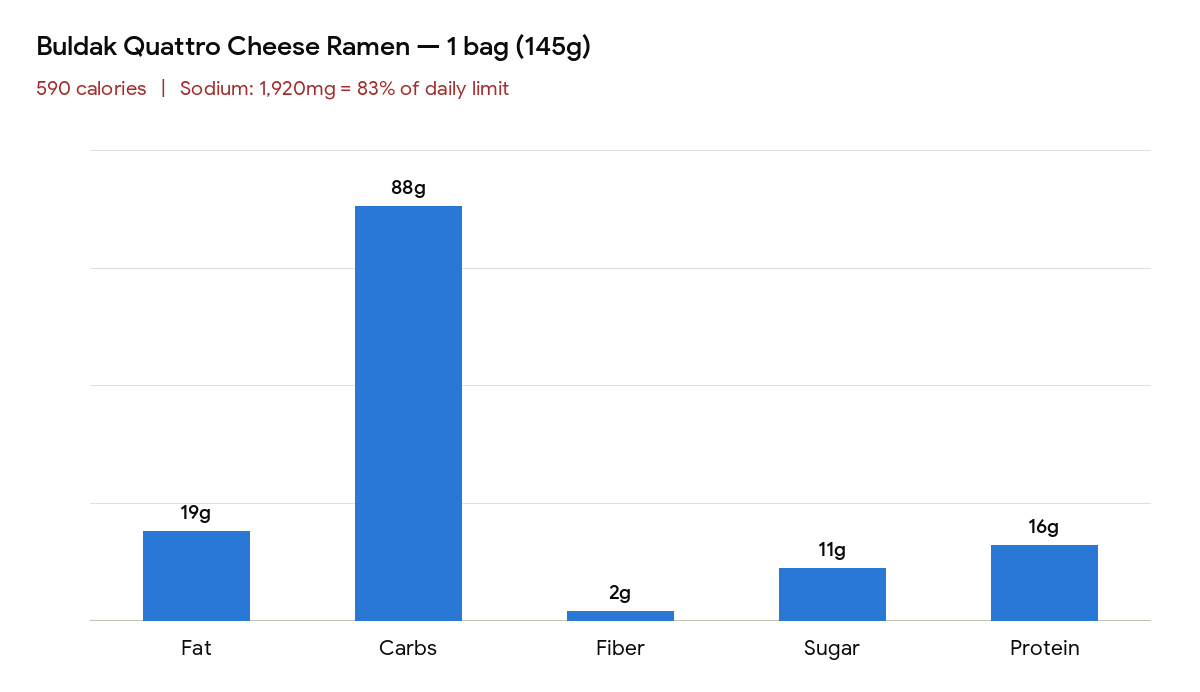
The recommended daily sodium limit is 2,300mg for people ages 14 and up, according to the CDC — that’s the number the “% Daily Value” on every Nutrition Facts label is measured against. One bag (145g, one serving) of Samyang’s Quattro Cheese Buldak Ramen has 590 calories, 19g of total fat, 88g of carbohydrates, 2g of fiber, 11g of total sugar, and 16g of protein. None of those numbers are unusual for a ramen-style noodle dish. The sodium is the outlier: 1,920mg, or 83% of a full day’s recommended limit, in one bag.
For context, that’s not unique to this flavor or this brand. A 2017 study in Nutrients that analyzed 765 instant noodle products across ten countries found that a single packet typically contributes anywhere from 35% to 95% of the World Health Organization’s recommended daily salt limit, with wide variation between brands and countries.
If you’re the kind of person who reaches for the Quattro Cheese Buldak Ramen specifically, the fiber and protein aren’t bad for an instant noodle dish — it’s really just the sodium number that deserves a second look before this becomes a weekly habit.
That one number isn’t the full story, though — what matters more is what tends to happen when a food like this becomes a regular part of the week instead of an occasional one.
What Happens If You Eat It Often? Here’s What the Research Says
A 2017 study of 3,397 college students in Seoul found that students who ate instant noodles three or more times a week had significantly higher triglycerides, diastolic blood pressure, and fasting blood glucose than students who ate them once a month or less, after adjusting for age, weight, and other dietary habits. The effect was notably stronger in female students than male students in that study.
That same study cites earlier Harvard-led research finding that women who ate instant noodles twice a week or more had a 68% higher rate of metabolic syndrome than infrequent eaters — though the same association wasn’t found in men. Researchers aren’t entirely sure why the effect shows up more in women; possible explanations include differences in overall diet composition and hormonal factors, but it’s still an open question.
It’s worth being precise about what this kind of research can and can’t tell you: these are observational studies, which means they show a pattern, not proof that ramen itself causes these changes. People who eat instant noodles several times a week may also differ from infrequent eaters in other ways that affect these same numbers. Still, the direction of the pattern — more frequent instant noodle intake lining up with higher blood pressure and blood sugar markers — shows up consistently enough across multiple studies to take seriously.
One thing worth flagging honestly: there isn’t good research on whether eating spicy cheese ramen in the morning versus the evening makes any real difference. For sodium specifically, your total intake across the whole day — and how often meals like this show up in a given week — matters far more than the time on the clock.
That doesn’t mean the answer is to cut it out entirely. It means it’s worth knowing what actually helps offset the sodium load when you do have it.
Balancing It Out: What Actually Helps With Sodium
The World Health Organization recommends adults get at least 3,510mg of potassium a day from food, and notes that when sodium and potassium intake are both at recommended levels, the ratio between them works out to roughly 1-to-1 — a balance that research suggests helps offset some of the negative effects of a high-sodium diet. The same WHO guideline notes that most people around the world actually get a ratio closer to 2-to-1 sodium to potassium, meaning most of us are undershooting on the potassium side rather than just overshooting on sodium.
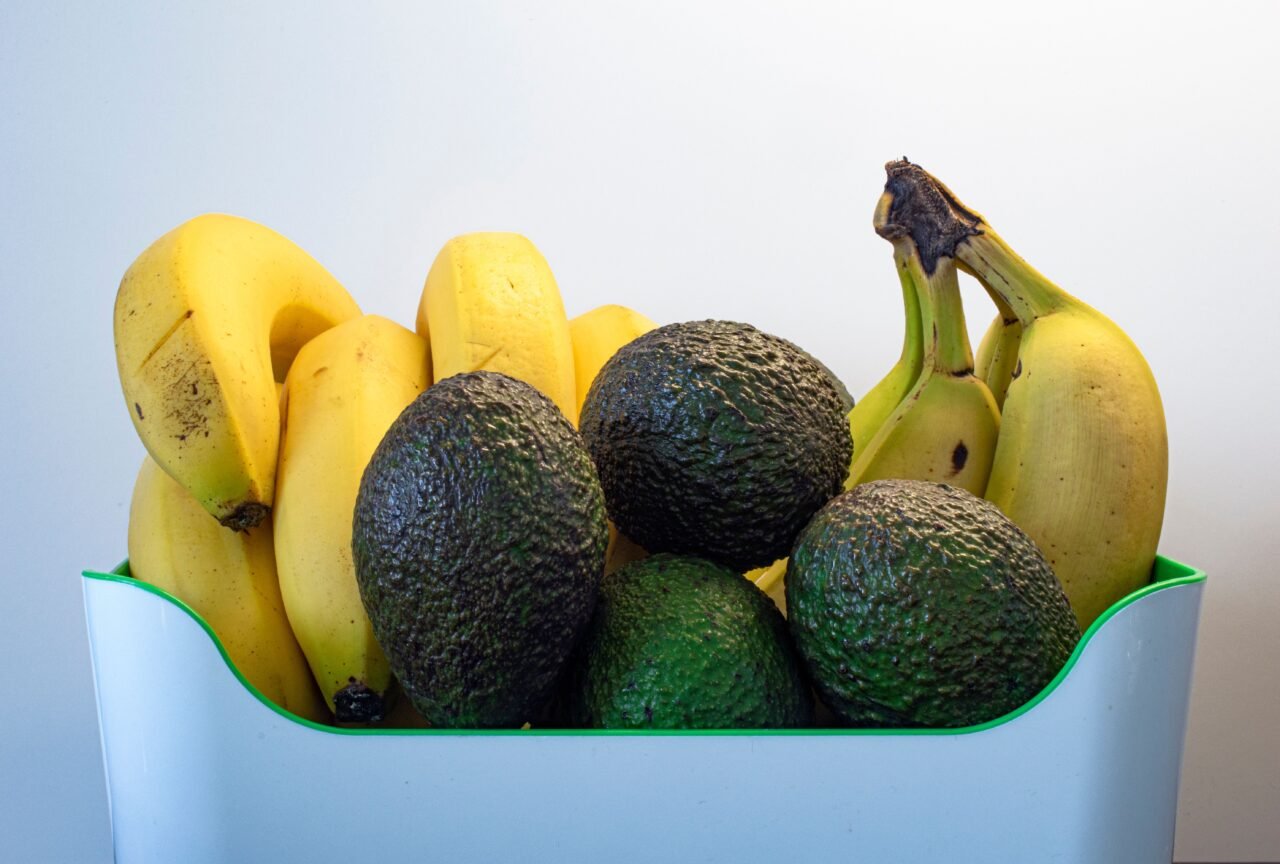
The most direct way to close that gap is through food, not a pill: bananas, spinach, potatoes (with the skin), and avocado are all solid sources of potassium. If you’re the kind of person who’d rather cover it with a supplement, that’s a conversation worth having with a doctor first — high-dose potassium supplements can be genuinely risky for anyone with reduced kidney function, since the kidneys are what clear excess potassium from the blood.
The Practical Version: How to Enjoy It Without Overdoing the Sodium
None of this has to mean giving up the Quattro Cheese Buldak Ramen or any other spicy cheese ramen you’re into. A few things that actually make a practical difference: using less than the full sauce packet cuts down on sodium, even if the exact amount depends on how much you leave out. Treating it as an occasional meal rather than a several-times-a-week habit lines up with what the research above actually measured — the associations showed up most clearly at three-plus times a week, not at “once in a while.” And pairing it with something potassium-rich on the side, like a banana or a side of spinach, is a small, realistic way to nudge that sodium-to-potassium ratio back in a better direction.
The Bottom Line
That 83% number from the start of this post isn’t a reason to panic — it’s just information that’s easy to miss if you’re not looking for it. One bag of Buldak Quattro Cheese ramen puts you most of the way to a full day’s recommended sodium limit, and the research on frequent instant noodle consumption suggests that’s worth paying attention to if it’s becoming a several-times-a-week thing rather than an occasional one.
None of that makes it something to cut out entirely, and none of it means the fiber and protein it does offer don’t count for anything. It just means the honest answer to “is this bad for you” depends almost entirely on how often it shows up on your plate. Knowing that one number, and pairing it with a few potassium-rich foods when you can, is a more useful approach than either ignoring the label or swearing off the noodles for good.
Sources
- CDC. “Nutrition Facts Label and Your Health.” Healthy Weight and Growth. Reviewed April 2026.
- Farrand C, et al. “Know Your Noodles! Assessing Variations in Sodium Content of Instant Noodles across Countries.” Nutrients. 2017;9(6):612.
- Huh IS, et al. “Instant noodle consumption is associated with cardiometabolic risk factors among college students in Seoul.” Nutrition Research and Practice. 2017;11(3):232-239.
- World Health Organization. “Guideline: Potassium Intake for Adults and Children.” Geneva: WHO; 2012.